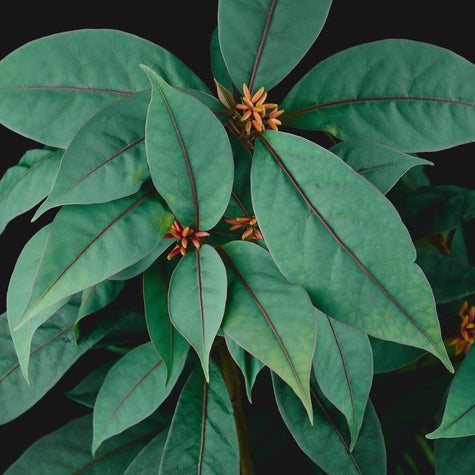
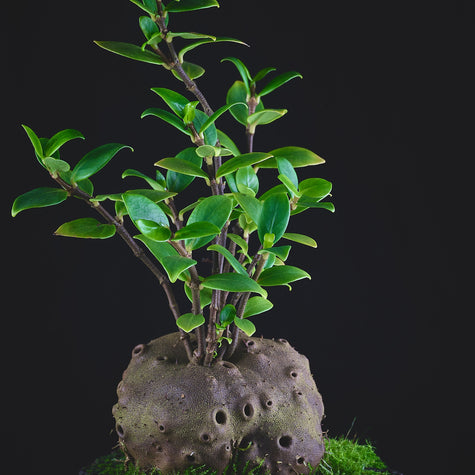
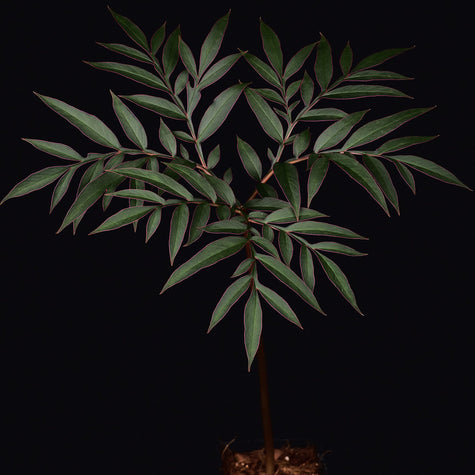
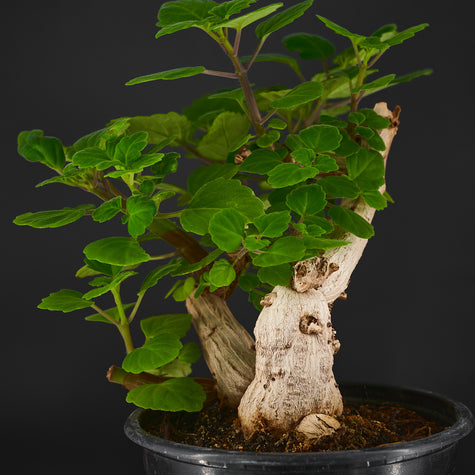
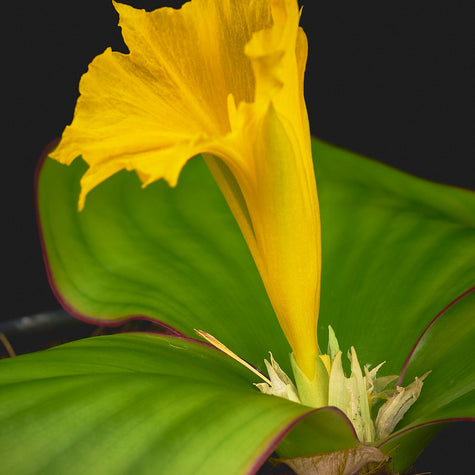


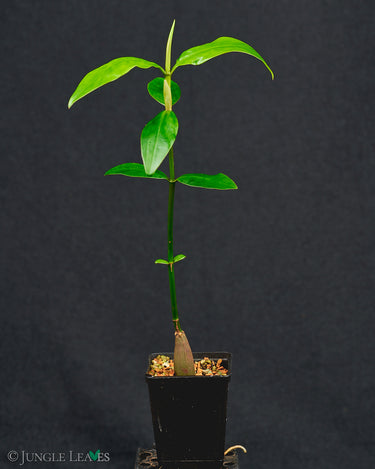


Bruguiera sexangula (Orange Mangrove)
24,99€ EUR
/
Tax included.
Shipping calculated at checkout.
 Bruguiera sexangula (Orange Mangrove)
24,99€ EUR
/
Bruguiera sexangula (Orange Mangrove)
24,99€ EUR
/

Bruguiera sexangula (Orange Mangrove)
24,99€ EUR
/
In stock
products.product.pickup_availability.unavailable
Description

Fig.: Bruguiera mangroves can be found in similar habitats to the well-known red mangroves, but not in America.
This species is very similar to Bruguiera gymnorhiza , which is also known as orange mangrove. It has slightly smaller leaves, pink instead of white flowers, and inhabits the upper reaches of estuaries with more freshwater than saltwater. It is not quite as salt-tolerant as B. gymnorhiza and should therefore be kept in freshwater or brackish water, but not in fully saline conditions. Our B. sexangula are kept in freshwater. Cultivation in a pot with a raised bed is also possible.
While the well-known red mangrove, Rhizophora mangle, is only found in East Africa, Central and South America, the orange mangrove, Bruguiera, occupies similar ecological niches in the rest of the world. Its distribution ranges from West Africa through India and Malesia to northern Australia. Like Rhizophora, Bruguiera belongs to the Rhizophoraceae family within the Malpighiales order and forms similar stilt-like root structures. Bruguiera mangroves are found very close to the coast, for example in estuaries, where they must tolerate highly variable salinity levels, ranging from almost salt-free to almost completely saline. The soil in these areas is characterized by very fine sediment deposits, which are washed inland from the adjacent rivers and settle here over long periods due to the slowed flow rate. The majority of this silt consists of fine, siliceous abrasion clay. Organic plant remains and detritus are also present.
In order to anchor themselves in this unstable and often changing substrate, these trees, which can grow up to 20 m tall, form a network of stilt roots that further anchor the plant superficially in all directions.
Similar to Rhizophora , the seeds of Bruguiera also germinate on the mother plant, but practically fully developed young plants (vivipary) are used for dispersal. These buoyant young plants are significantly shorter and thicker than those of Rhizophora and can often be found washed up on beaches. When these diaspores find suitable substrate, they immediately anchor themselves with their first roots and begin to sprout.
Care tips
Light & Location
Substrate & Repotting
Watering & Fertilizing
What makes us at Jungle Leaves special!


Welcome
Bring the Tropic to Your Home
Jungle Leaves is a team of 3 biologists who breed, propagate and sell extraordinary and unique plants from all over the world, also in cooperation with botanical gardens.