
















Hildewintera colademononis
29,99€ EUR
/
Sold out
Tax included.
Shipping calculated at checkout.
 Hildewintera colademononis
29,99€ EUR
/
Hildewintera colademononis
29,99€ EUR
/

Hildewintera colademononis
29,99€ EUR
/
products.product.pickup_availability.unavailable
Description
This cactus is known by many names. More on that below.
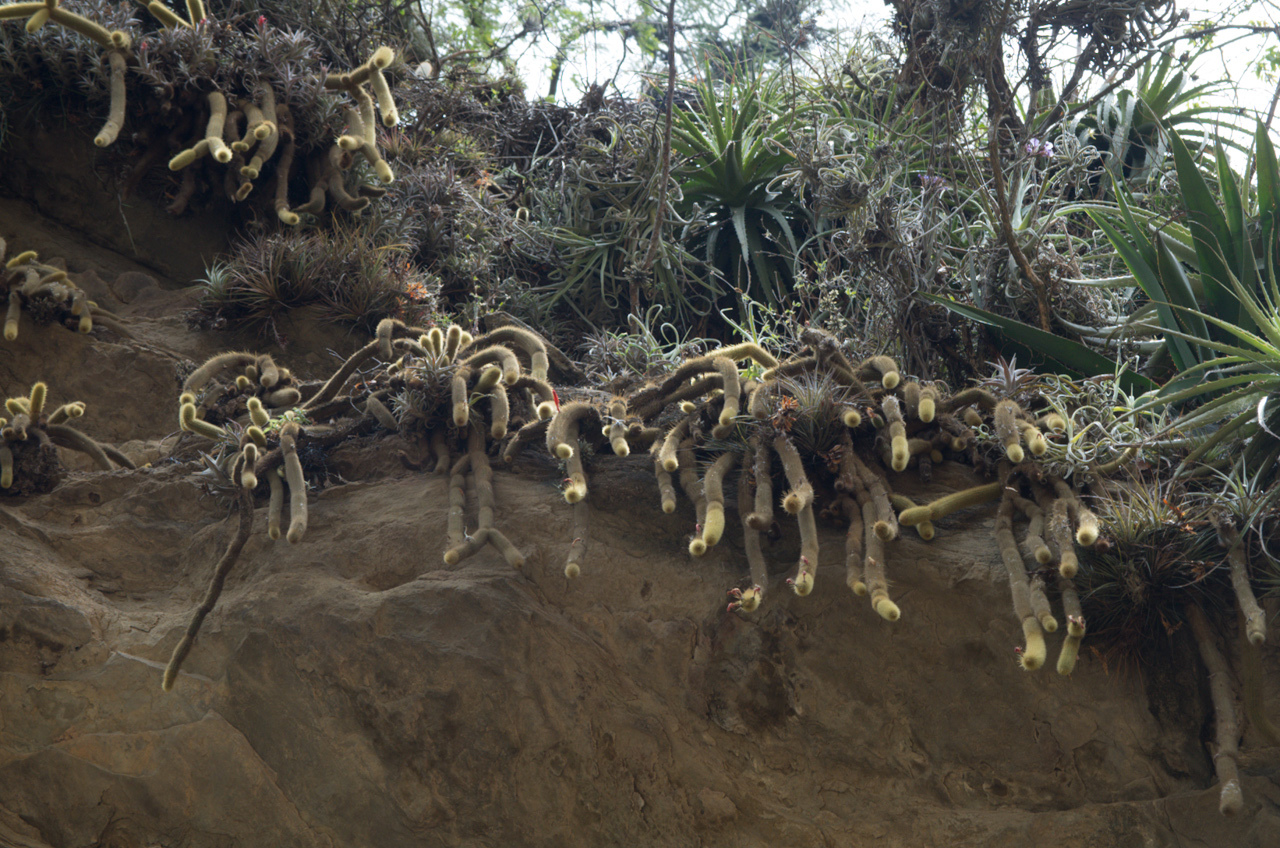
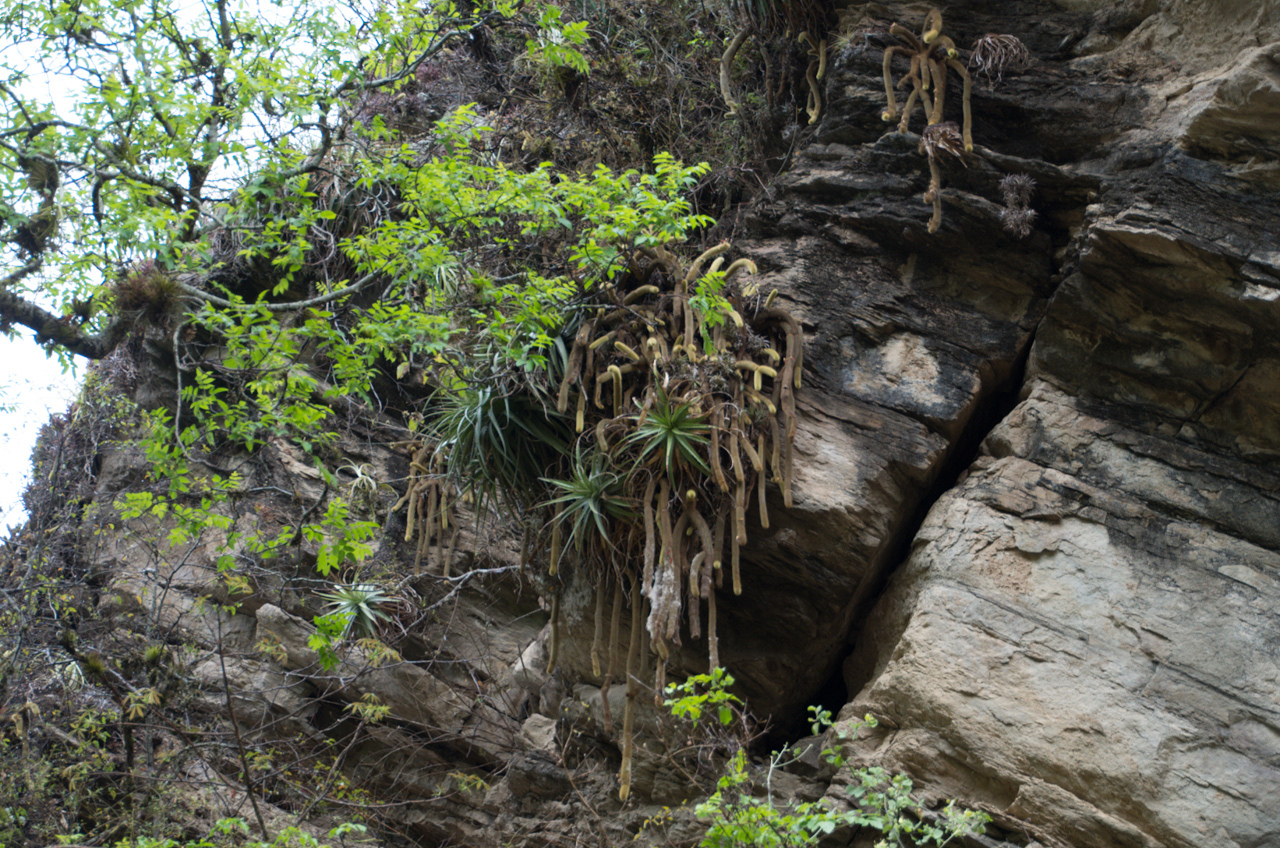
It originates from the Santa Cruz Department in Bolivia. It grows in the highlands, at an altitude of 1300-1500 meters above sea level. The species is lithophytic and grows hanging from steep rock faces that rise out of the surrounding rainforest. It therefore inhabits a rather dry, sun-exposed microhabitat in a humid, tropical climate.
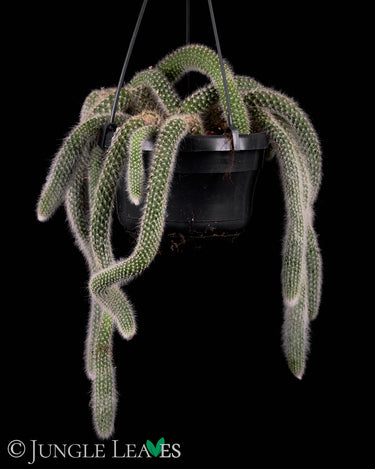
The trunks grow up to 2.5 meters long and are about 3 to 7 centimeters thick. They have 14 to 20 ribs, which are barely visible beneath the dense fur of soft, hair-like spines. The English name "monkey's tail" refers to the appearance of the hairy trunks.
The flowers are about 7 to 8 cm long and intensely red. A cooler dormancy period at 5 to 15 degrees Celsius in winter promotes abundant flowering.
This cactus can be found under many names, for example as:
This confusion surrounding cacti is typical. The names are often based on contentious, purely morphological arguments. Modern molecular biologists of the last 20 years, who could clarify such questions with molecular genetic analyses, seem to have yet to find their way into the world of cactus taxonomists.
You will receive a strong, multi-stemmed plant in a 12cm hanging pot.
It originates from the Santa Cruz Department in Bolivia. It grows in the highlands, at an altitude of 1300-1500 meters above sea level. The species is lithophytic and grows hanging from steep rock faces that rise out of the surrounding rainforest. It therefore inhabits a rather dry, sun-exposed microhabitat in a humid, tropical climate.
The trunks grow up to 2.5 meters long and are about 3 to 7 centimeters thick. They have 14 to 20 ribs, which are barely visible beneath the dense fur of soft, hair-like spines. The English name "monkey's tail" refers to the appearance of the hairy trunks.
The flowers are about 7 to 8 cm long and intensely red. A cooler dormancy period at 5 to 15 degrees Celsius in winter promotes abundant flowering.
This cactus can be found under many names, for example as:
- Cleistocactus colademononis (German Wikipedia, with outdated reference to Diers & Krahn, 2003)
- Cleistocactus winteri (English Wikipedia, with alleged subspecies C. winteri subsp. colademonis [sic] with reference to Hunt, 2005)
- Borzicactus aureispinus (gbif.org, without recognized subspecies colademononis with reference to GD Rowley, 1975)
- and many other names, e.g. Winterocereus instead of Hildewinteria (according to Metzling & Kiesling, 2007)
This confusion surrounding cacti is typical. The names are often based on contentious, purely morphological arguments. Modern molecular biologists of the last 20 years, who could clarify such questions with molecular genetic analyses, seem to have yet to find their way into the world of cactus taxonomists.
You will receive a strong, multi-stemmed plant in a 12cm hanging pot.
Care tips
Light & Location
Substrate & Repotting
Watering & Fertilizing
What makes us at Jungle Leaves special!


Welcome
Bring the Tropic to Your Home
Jungle Leaves is a team of 3 biologists who breed, propagate and sell extraordinary and unique plants from all over the world, also in cooperation with botanical gardens.