



Hoya imbricata
14,99€ EUR
/
Sold out
Tax included.
Shipping calculated at checkout.
 Hoya imbricata
14,99€ EUR
/
Hoya imbricata
14,99€ EUR
/

Hoya imbricata
14,99€ EUR
/
products.product.pickup_availability.unavailable
Description
Hoya imbricata originates from Mindanao, Palawan, Sulawesi and some other small Philippine islands.
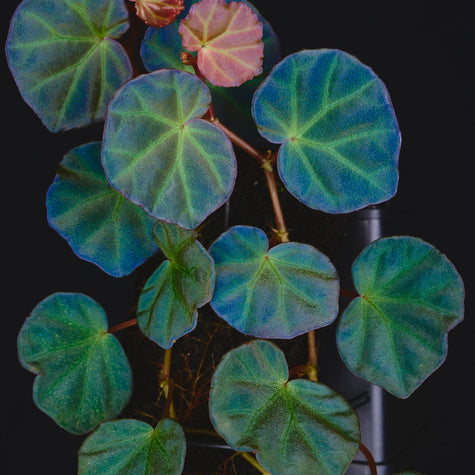
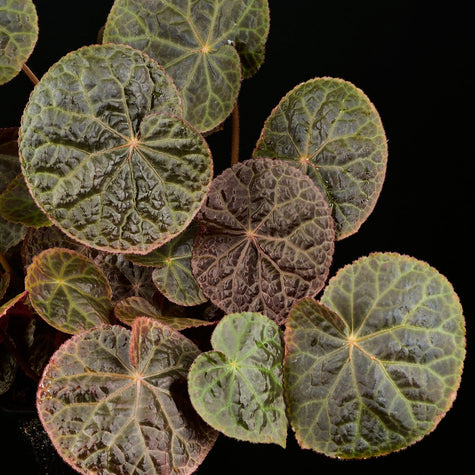
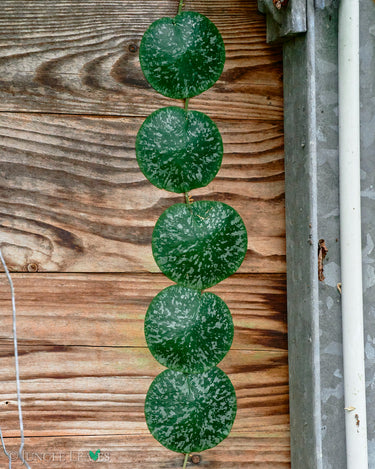
It immediately stands out due to its unusual growth form. In nature, it grows purely epiphytically on the trunks and branches of large rainforest trees. It produces only one leaf per node. The leaves are circular with a diameter of approximately 6 to 10 cm and lie close to the surface with their edges, while the center of the leaf curls upwards, creating a hollow space. The shape resembles a suction cup. Only a small, raised opening near the trunk leads into the interior. If the leaves cannot find a surface to cling to, they fold up.
In nature, the hollow space beneath the leaf is used by ants (mainly Philidris ) as a nest; the small opening serves as the nest entrance. The leaves along the stem overlap by approximately 1 cm , creating a continuous cavity that can be inhabited by the ants. Along the stem and especially beneath the leaves , Hoya imbricata produces fine roots that absorb the nutrients brought in by the ants. Hoya imbricata is therefore a so-called ant plant (although ants are not actually needed to care for this plant).
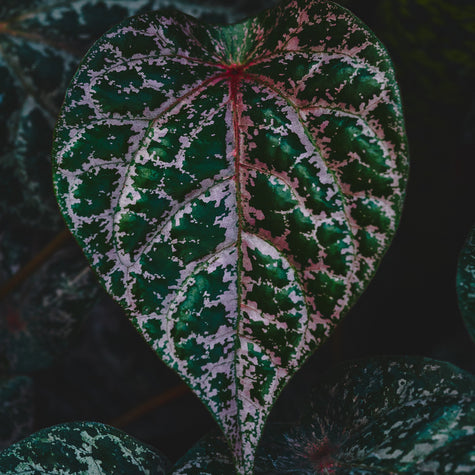
The leaves are variable in color. They are usually dark green with light speckles, but there are also entirely green varieties. In bright light, they turn reddish. The speckled variety, in particular, then looks as if someone has glued slices of salami to a tree .
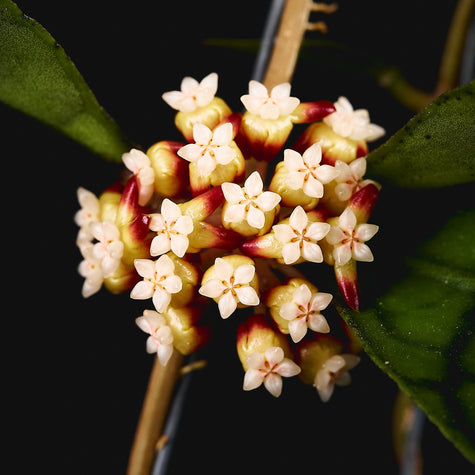
The flowers are quite typical for Hoya . They appear in flat umbels of 6 to 12 individual flowers and are yellowish-white with an orange/reddish corona and fine hairs.
You will receive a well-rooted cutting in a 9 cm orchid pot with new growth.
It immediately stands out due to its unusual growth form. In nature, it grows purely epiphytically on the trunks and branches of large rainforest trees. It produces only one leaf per node. The leaves are circular with a diameter of approximately 6 to 10 cm and lie close to the surface with their edges, while the center of the leaf curls upwards, creating a hollow space. The shape resembles a suction cup. Only a small, raised opening near the trunk leads into the interior. If the leaves cannot find a surface to cling to, they fold up.
In nature, the hollow space beneath the leaf is used by ants (mainly Philidris ) as a nest; the small opening serves as the nest entrance. The leaves along the stem overlap by approximately 1 cm , creating a continuous cavity that can be inhabited by the ants. Along the stem and especially beneath the leaves , Hoya imbricata produces fine roots that absorb the nutrients brought in by the ants. Hoya imbricata is therefore a so-called ant plant (although ants are not actually needed to care for this plant).
The leaves are variable in color. They are usually dark green with light speckles, but there are also entirely green varieties. In bright light, they turn reddish. The speckled variety, in particular, then looks as if someone has glued slices of salami to a tree .
The flowers are quite typical for Hoya . They appear in flat umbels of 6 to 12 individual flowers and are yellowish-white with an orange/reddish corona and fine hairs.
You will receive a well-rooted cutting in a 9 cm orchid pot with new growth.
Care tips
Light & Location
Substrate & Repotting
Watering & Fertilizing
What makes us at Jungle Leaves special!


Welcome
Bring the Tropic to Your Home
Jungle Leaves is a team of 3 biologists who breed, propagate and sell extraordinary and unique plants from all over the world, also in cooperation with botanical gardens.