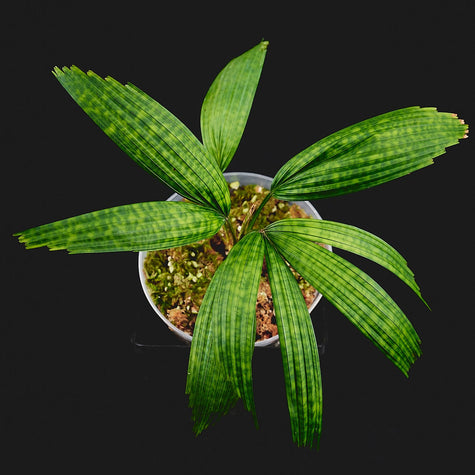




Hydnophytum puffii (= sp. 'Needle leaf')
24,99€ EUR
/
Sold out
Tax included.
Shipping calculated at checkout.
 Hydnophytum puffii (= sp. 'Needle leaf')
24,99€ EUR
/
Hydnophytum puffii (= sp. 'Needle leaf')
24,99€ EUR
/

Hydnophytum puffii (= sp. 'Needle leaf')
24,99€ EUR
/
products.product.pickup_availability.unavailable
Description
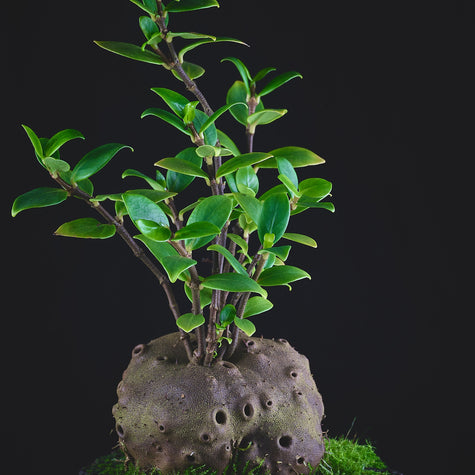
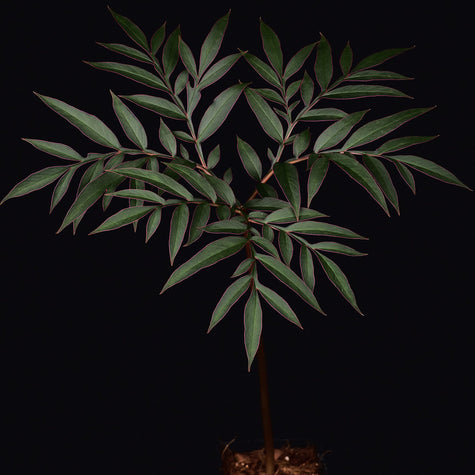
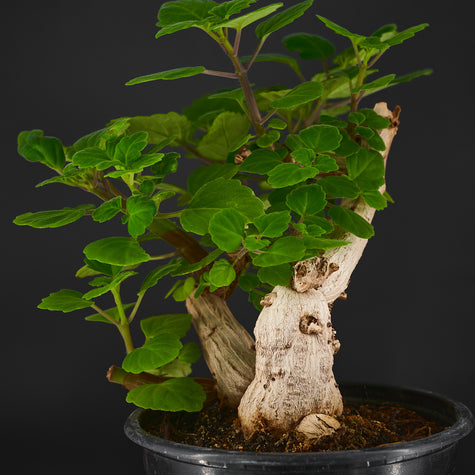
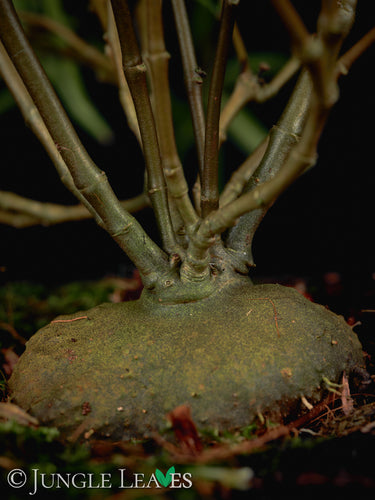
This small ant plant originates from Sarawak and Sabah (Borneo, Malaysia). It is a very small Hydnophytum species, perhaps the smallest described ant plant species! The caudex is rounded and smooth, only exceptionally reaching a diameter of approximately 10 cm, but usually remaining at 5–7 cm. It typically has no visible entrances, as these face the substrate and are thus hidden from view. The narrow, almost needle-like leaves are particularly striking. Before its description as a new species in 2016 by Low, Sugau & Wong, it was therefore known in the hobby as "sp. Needle Leaf".
The branches grow to about 20 to 30 cm long, but can be kept smaller through regular pruning. The species branches profusely and can therefore be pruned without any problems.
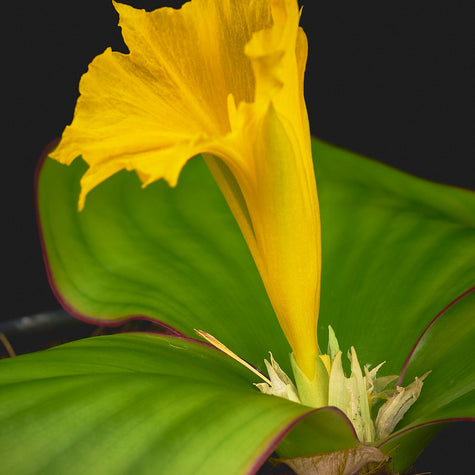
The flowers are tiny, about 3 to 5 mm in size and white. They are only open for one day, and small berries, about 5 mm in size, develop from them, which are red when ripe.
Due to its small size and compact growth, it is an ideal terrarium plant for anyone looking to acquire a truly unusual rarity. Its narrow leaves are unique among lowland ant plants.
[porto_content_box border_top_color="#1e764d" border_radius="2" border_top_width="2" align="left"]
[expand Title=" About Ant Plants "]
Hydnophytum are so-called "ant plants" from the Rubiaceae family. They are widespread from Southeast Asia to Australia and from Papua to the Solomon Islands, and usually grow epiphytically on trees. They belong to the myrmecodomen ant plants, meaning they provide nesting sites for ants. Their thickened stem, also called a "caudex," is riddled with numerous tunnels and chambers inhabited by specialized ants, mostly from the genus Philidris . The ants do not create the chambers or the entrances themselves; these are formed solely by the plant, regardless of whether ants are present or not.
The plant has a mutually beneficial relationship with the ants that live in it. The ants protect the plant and their nest, and fertilize it with leftover food, droppings, and other waste. The plant contains several different types of chambers: some with smooth walls and others with warty walls. The warty chambers, in particular, are specially adapted for absorbing nutrients. The ants use the smooth chambers for nesting and the warty chambers as a waste disposal site, thus supplying the plant with nutrients. In some highly specialized ant-inhabiting plants, the ants even pollinate the flowers and plant the seedlings!
Over many years, the colonies of ants and ant-attracting plants spread across a tree, and other epiphytes associated with ants, such as Hoya , Dischidia , Lecanopteris , and orchids, also join them. A so-called " ant garden " is created.
Not every ant-friendly plant is actually inhabited by ants in nature. In fact, there are numerous species where ants have never been detected! This also means that no ant-friendly plant necessarily needs an ant colony to survive or thrive. All of our cultivated ant-friendly plants are, of course, ant-free! The caudex forms exactly the same way as it does in nature, even without ants.
[/expand]
[/porto_content_box]
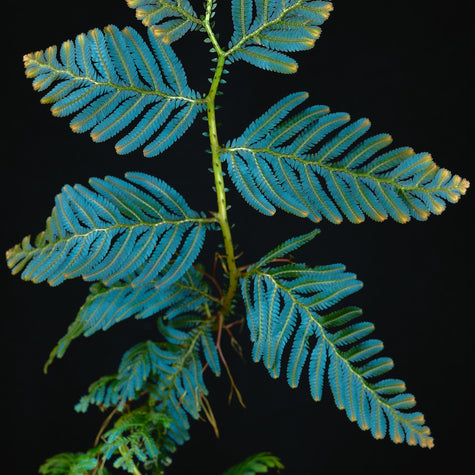
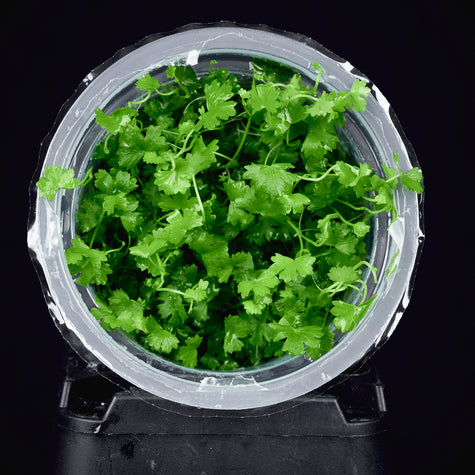
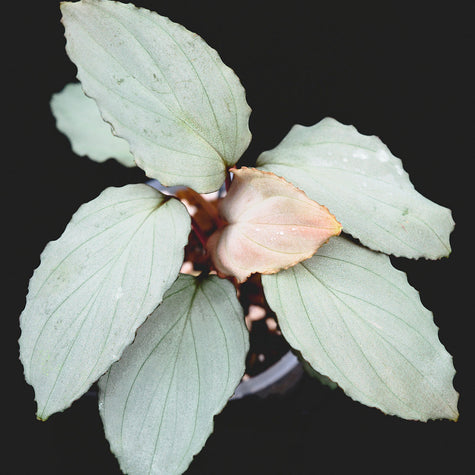
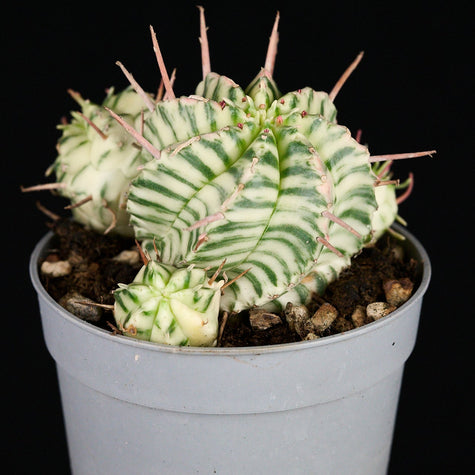
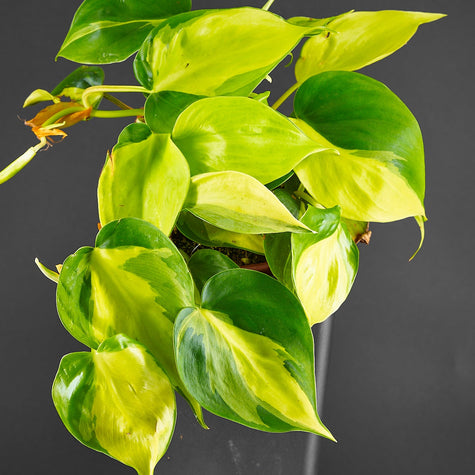
You will receive a young plant in a 5.5cm pot (see picture 3 in the gallery).
The branches grow to about 20 to 30 cm long, but can be kept smaller through regular pruning. The species branches profusely and can therefore be pruned without any problems.
The flowers are tiny, about 3 to 5 mm in size and white. They are only open for one day, and small berries, about 5 mm in size, develop from them, which are red when ripe.
Due to its small size and compact growth, it is an ideal terrarium plant for anyone looking to acquire a truly unusual rarity. Its narrow leaves are unique among lowland ant plants.
[porto_content_box border_top_color="#1e764d" border_radius="2" border_top_width="2" align="left"]
[expand Title=" About Ant Plants "]
Hydnophytum are so-called "ant plants" from the Rubiaceae family. They are widespread from Southeast Asia to Australia and from Papua to the Solomon Islands, and usually grow epiphytically on trees. They belong to the myrmecodomen ant plants, meaning they provide nesting sites for ants. Their thickened stem, also called a "caudex," is riddled with numerous tunnels and chambers inhabited by specialized ants, mostly from the genus Philidris . The ants do not create the chambers or the entrances themselves; these are formed solely by the plant, regardless of whether ants are present or not.
The plant has a mutually beneficial relationship with the ants that live in it. The ants protect the plant and their nest, and fertilize it with leftover food, droppings, and other waste. The plant contains several different types of chambers: some with smooth walls and others with warty walls. The warty chambers, in particular, are specially adapted for absorbing nutrients. The ants use the smooth chambers for nesting and the warty chambers as a waste disposal site, thus supplying the plant with nutrients. In some highly specialized ant-inhabiting plants, the ants even pollinate the flowers and plant the seedlings!
Over many years, the colonies of ants and ant-attracting plants spread across a tree, and other epiphytes associated with ants, such as Hoya , Dischidia , Lecanopteris , and orchids, also join them. A so-called " ant garden " is created.
Not every ant-friendly plant is actually inhabited by ants in nature. In fact, there are numerous species where ants have never been detected! This also means that no ant-friendly plant necessarily needs an ant colony to survive or thrive. All of our cultivated ant-friendly plants are, of course, ant-free! The caudex forms exactly the same way as it does in nature, even without ants.
[/expand]
[/porto_content_box]
You will receive a young plant in a 5.5cm pot (see picture 3 in the gallery).
Care tips
Light & Location
Substrate & Repotting
Watering & Fertilizing
What makes us at Jungle Leaves special!


Welcome
Bring the Tropic to Your Home
Jungle Leaves is a team of 3 biologists who breed, propagate and sell extraordinary and unique plants from all over the world, also in cooperation with botanical gardens.