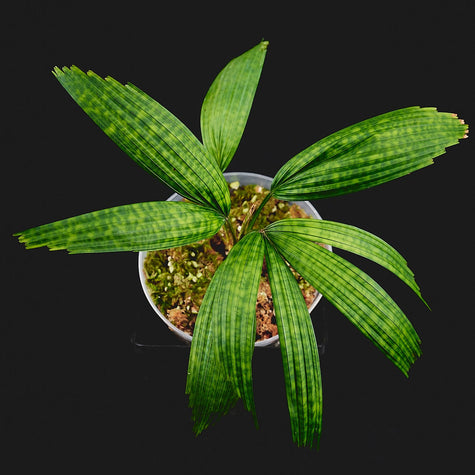




Utricularia longifolia
9,99€ EUR
/
Sold out
Tax included.
Shipping calculated at checkout.
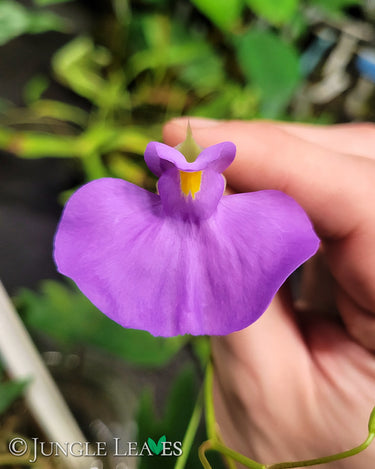
A large, epiphytic Utricularia with bright purple flowers and very long leaves.
 Utricularia longifolia
9,99€ EUR
/
Utricularia longifolia
9,99€ EUR
/

Utricularia longifolia
9,99€ EUR
/
products.product.pickup_availability.unavailable
Description
Utricularia longifolia is a large-flowered, epiphytic eucalyptus with narrow leaves up to 50 cm long. The bright purple flowers, up to 5 cm across, are typically produced from spring into early summer and last an astonishingly long time! They remain open for over a month and impress with their size and vibrancy. Utricularia longifolia has a wide distribution and can be found in Brazil, Colombia, Suriname, and El Salvador on nutrient-poor soils.
Utricularia are carnivorous plants with leaves modified into suction traps. These are either underground (in terrestrial species) or suspended in water (in aquatic species). A vacuum is created inside the small, bladder-like traps. When microorganisms (including water fleas, rotifers, nematodes, and paramecia) come into contact with the lids of these traps, they touch tiny hairs that trigger the trapping mechanism.
These hairs act as levers, gently pushing the lid inwards. This allows water to flow in. The subsequent abrupt pressure equalization forces the water, along with the prey, into the trap's bladder. The trap then closes again. This is one of the fastest known movements in the plant kingdom; the opening and closing process takes less than two milliseconds!
Glands within the trap then begin digesting the prey. Simultaneously, the trap begins pumping out the excess water, thus creating the necessary negative pressure for the next catch. This process can be completed in as little as fifteen minutes.
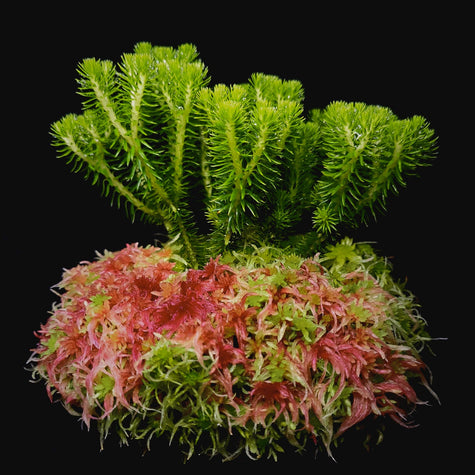
If the traps are the leaves, what are the green leaves you see on the surface? These are actually the plant's stems, which have broadened and taken over the function of leaves. They are called phylloclades.
Utricularia longifolia forms trapping bladders up to 3mm in size, which is among the largest in the genus.
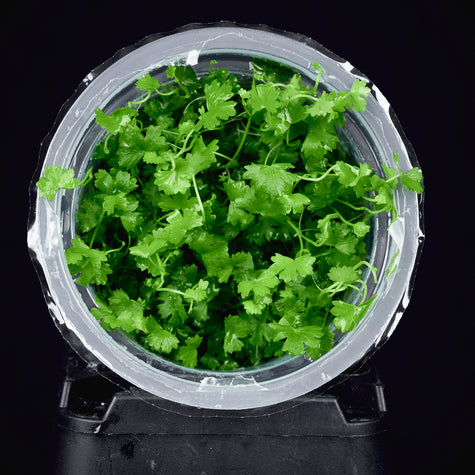
You will receive a densely planted 7cm pot.
Utricularia are carnivorous plants with leaves modified into suction traps. These are either underground (in terrestrial species) or suspended in water (in aquatic species). A vacuum is created inside the small, bladder-like traps. When microorganisms (including water fleas, rotifers, nematodes, and paramecia) come into contact with the lids of these traps, they touch tiny hairs that trigger the trapping mechanism.
These hairs act as levers, gently pushing the lid inwards. This allows water to flow in. The subsequent abrupt pressure equalization forces the water, along with the prey, into the trap's bladder. The trap then closes again. This is one of the fastest known movements in the plant kingdom; the opening and closing process takes less than two milliseconds!
Glands within the trap then begin digesting the prey. Simultaneously, the trap begins pumping out the excess water, thus creating the necessary negative pressure for the next catch. This process can be completed in as little as fifteen minutes.
If the traps are the leaves, what are the green leaves you see on the surface? These are actually the plant's stems, which have broadened and taken over the function of leaves. They are called phylloclades.
Utricularia longifolia forms trapping bladders up to 3mm in size, which is among the largest in the genus.
You will receive a densely planted 7cm pot.
Care tips
Light & Location
Substrate & Repotting
Watering & Fertilizing
What makes us at Jungle Leaves special!


Welcome
Bring the Tropic to Your Home
Jungle Leaves is a team of 3 biologists who breed, propagate and sell extraordinary and unique plants from all over the world, also in cooperation with botanical gardens.