



Anthurium luxurians
19,99€ EUR
/
Tax included.
Shipping calculated at checkout.
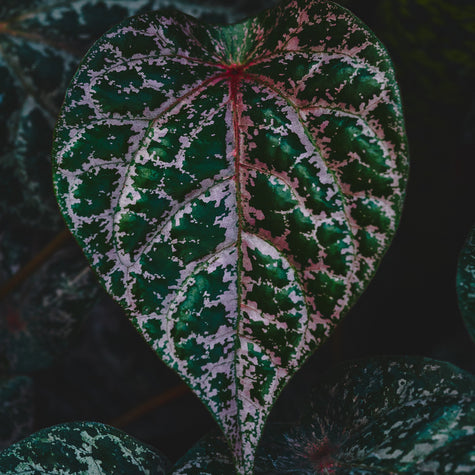
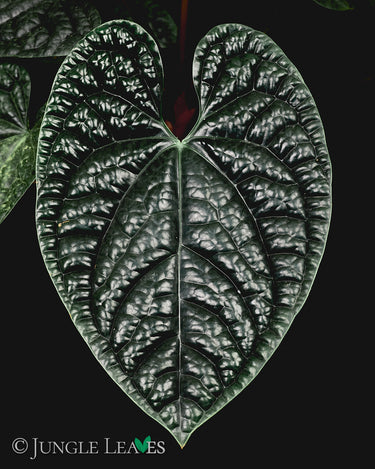
Spectacular anthurium, probably from Colombia, with dark, bullate leaves. Slow growth but quite robust and easy to care for.
 Anthurium luxurians
19,99€ EUR
/
Anthurium luxurians
19,99€ EUR
/

Anthurium luxurians
19,99€ EUR
/
In stock
products.product.pickup_availability.unavailable
Description
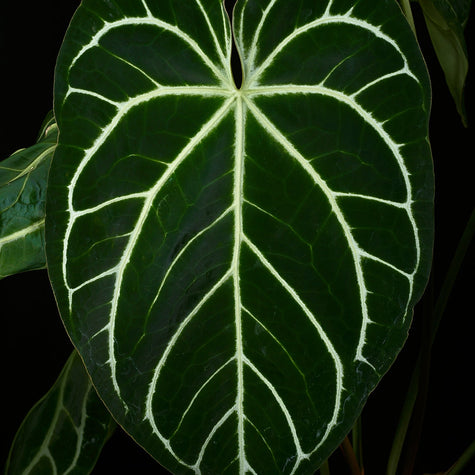
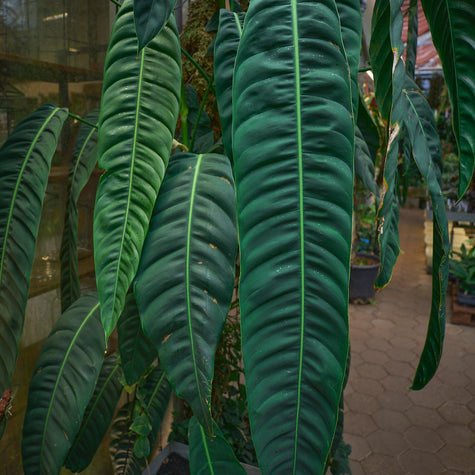
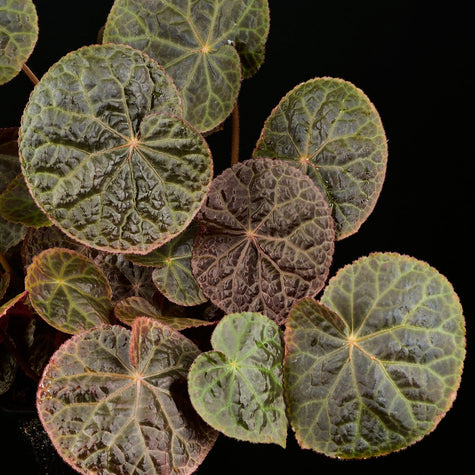
Anthurium luxurians is one of the most spectacular species of all Anthuriums . With over 1000 species in the genus, that's quite an achievement! It is distinguished by its strongly bullate, dark leaves. Of all Anthuriums, it probably has the most extreme form of bullae ("blisters") on its leaves. The leaf veins are deeply sunken, and the leaf lamina between them is bulged upwards in a bladder-like shape. These bullae are also found in many other plants that grow in very shady habitats, and they likely serve to increase the leaf surface area in order to capture weak, diffuse residual light.
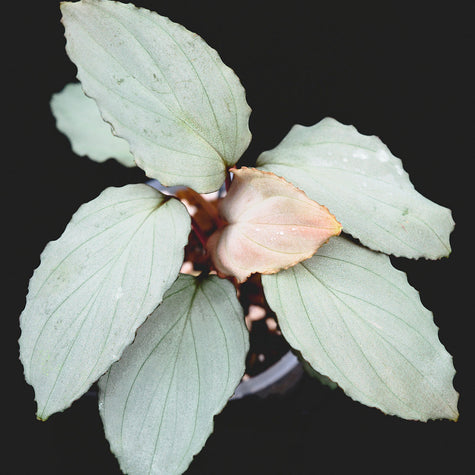
The color of the leaves of Anthurium luxurians is also spectacular. Young plants initially have completely silver leaves. This coloration fades as the plant grows, and in truly mature specimens, the leaves become very dark, almost black. Fresh leaves, whether on young plants or large specimens, are initially reddish-brown and develop their final color over several weeks. Anthurium luxurians grows slowly. From the appearance of a new leaf to its full coloration, it takes two to three months.
This species remains relatively small and compact. The robust rhizome reaches a diameter of approximately 8 cm, and the leaves grow to about 50 cm long and 25 cm wide. They are borne on petioles up to 90 cm long (though usually considerably shorter). The petioles have 7 to 9 prominent ridges, giving them an angular appearance, but they are actually round.
Surprisingly, it is not known where or how Anthurium luxurians grows in the wild. The species entered cultivation via an unknown source and has not been found in the wild since. It is likely that the species occurs on the slopes of the Western Cordillera, the western section of the Andes. Two other closely related species, Anthurium splendidum and Anthurium debilis , are found in this region. In fact, specimens that could be Anthurium luxurians were collected in the region by the Colombian gardener Marta Posada along small, damp stream valleys (arroyos) of the otherwise dry western slopes of the Western Cordillera. Those interested in reading more about the discovery history of A. luxurians can do so here .
Anthurium luxurians is surprisingly robust and well-suited as a houseplant, but it grows significantly slower than many other popular species, especially when cultivated "only" as a houseplant. The plants we have grown are accustomed to greenhouse conditions and should be gradually and carefully acclimated to indoor conditions.
You will receive a young plant in a 9cm orchid pot. The young plants still have their distinctive silvery leaves!
The color of the leaves of Anthurium luxurians is also spectacular. Young plants initially have completely silver leaves. This coloration fades as the plant grows, and in truly mature specimens, the leaves become very dark, almost black. Fresh leaves, whether on young plants or large specimens, are initially reddish-brown and develop their final color over several weeks. Anthurium luxurians grows slowly. From the appearance of a new leaf to its full coloration, it takes two to three months.
This species remains relatively small and compact. The robust rhizome reaches a diameter of approximately 8 cm, and the leaves grow to about 50 cm long and 25 cm wide. They are borne on petioles up to 90 cm long (though usually considerably shorter). The petioles have 7 to 9 prominent ridges, giving them an angular appearance, but they are actually round.
Surprisingly, it is not known where or how Anthurium luxurians grows in the wild. The species entered cultivation via an unknown source and has not been found in the wild since. It is likely that the species occurs on the slopes of the Western Cordillera, the western section of the Andes. Two other closely related species, Anthurium splendidum and Anthurium debilis , are found in this region. In fact, specimens that could be Anthurium luxurians were collected in the region by the Colombian gardener Marta Posada along small, damp stream valleys (arroyos) of the otherwise dry western slopes of the Western Cordillera. Those interested in reading more about the discovery history of A. luxurians can do so here .
Anthurium luxurians is surprisingly robust and well-suited as a houseplant, but it grows significantly slower than many other popular species, especially when cultivated "only" as a houseplant. The plants we have grown are accustomed to greenhouse conditions and should be gradually and carefully acclimated to indoor conditions.
You will receive a young plant in a 9cm orchid pot. The young plants still have their distinctive silvery leaves!
Care tips
Light & Location
Substrate & Repotting
Watering & Fertilizing
What makes us at Jungle Leaves special!


Welcome
Bring the Tropic to Your Home
Jungle Leaves is a team of 3 biologists who breed, propagate and sell extraordinary and unique plants from all over the world, also in cooperation with botanical gardens.