



Aristolochia gigantea (giant pipe flower)
19,99€ EUR
/
Sold out
Tax included.
Shipping calculated at checkout.
 Aristolochia gigantea (giant pipe flower)
19,99€ EUR
/
Aristolochia gigantea (giant pipe flower)
19,99€ EUR
/

Aristolochia gigantea (giant pipe flower)
19,99€ EUR
/
products.product.pickup_availability.unavailable
Description
The giant pipevine belongs to the birthwort family (Aristolochiaceae) and originates from eastern Brazil.
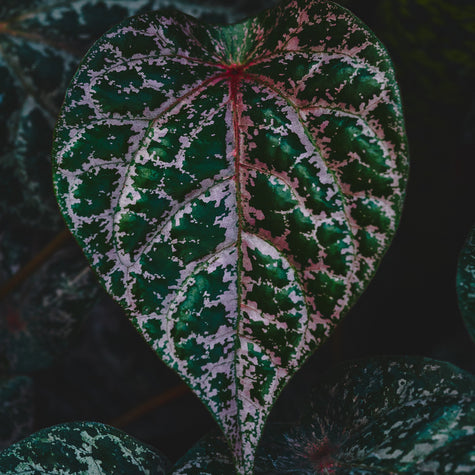
It grows as a vigorous tendril or liana and has large, heart-shaped leaves. The older stems have a very distinctive corky bark. The species name, gigantea , refers neither to the leaves nor to the overall size of the plant, but to the bizarre and truly gigantic flowers. These flowers are not only enormous, but also among the most complex and sophisticated in the entire plant kingdom!
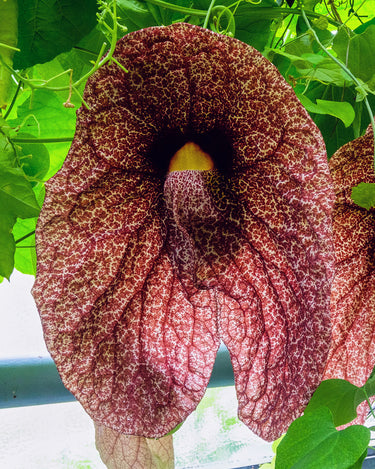
The petals are fused into a calyx. The front part of this calyx is elongated into a huge lobe (over 30 cm long!) and marbled red and white. It resembles flesh and thus attracts flies and carrion beetles. The rear part of the calyx narrows into an S-shaped tube lined with inward-pointing hairs. Pollinators are lured into this tube by scent and cannot escape. They are trapped inside the flower for several hours, distributing pollen onto the flower's receptive stigmas. After a few hours, the stigmas become insensitive to new pollen. Only then do the anthers mature and open to release their pollen onto the still-trapped insect. The hairs that hold the insect inside the flower then wither and shrink. This allows the pollinator to escape the tube and carry the pollen to the next flower.
Although A. gigantea is a carrion flower, it does not emit any unpleasant odor to humans. Either it is completely undetectable, or only a faint melon-like scent is perceived. It flowers in late summer.
You will receive a young plant in a 9cm pot on a 30cm trellis.
Preview image by Allan Harris on Flickr (CC BY-ND 2.0)
It grows as a vigorous tendril or liana and has large, heart-shaped leaves. The older stems have a very distinctive corky bark. The species name, gigantea , refers neither to the leaves nor to the overall size of the plant, but to the bizarre and truly gigantic flowers. These flowers are not only enormous, but also among the most complex and sophisticated in the entire plant kingdom!
The petals are fused into a calyx. The front part of this calyx is elongated into a huge lobe (over 30 cm long!) and marbled red and white. It resembles flesh and thus attracts flies and carrion beetles. The rear part of the calyx narrows into an S-shaped tube lined with inward-pointing hairs. Pollinators are lured into this tube by scent and cannot escape. They are trapped inside the flower for several hours, distributing pollen onto the flower's receptive stigmas. After a few hours, the stigmas become insensitive to new pollen. Only then do the anthers mature and open to release their pollen onto the still-trapped insect. The hairs that hold the insect inside the flower then wither and shrink. This allows the pollinator to escape the tube and carry the pollen to the next flower.
Although A. gigantea is a carrion flower, it does not emit any unpleasant odor to humans. Either it is completely undetectable, or only a faint melon-like scent is perceived. It flowers in late summer.
You will receive a young plant in a 9cm pot on a 30cm trellis.
Preview image by Allan Harris on Flickr (CC BY-ND 2.0)
Care tips
Light & Location
Substrate & Repotting
Watering & Fertilizing
What makes us at Jungle Leaves special!


Welcome
Bring the Tropic to Your Home
Jungle Leaves is a team of 3 biologists who breed, propagate and sell extraordinary and unique plants from all over the world, also in cooperation with botanical gardens.