


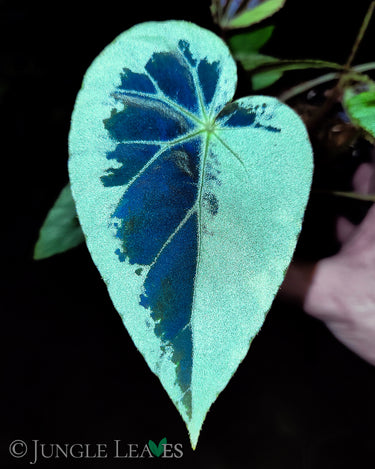


Begonia burkillii 'Silver Edge'
 Begonia burkillii 'Silver Edge'
19,99€ EUR
/
Begonia burkillii 'Silver Edge'
19,99€ EUR
/

products.product.pickup_availability.unavailable
Description
- Origin: India
- Care: Easy / Medium / Advanced
- Suitable as a houseplant?: Yes / Limited / No
- Suitable locations: Terrarium, plant display case, west-facing window, east-facing window
- Special features: This species is dioecious, meaning that male and female plants exist.
[porto_content_box border_top_color="#1e764d" border_radius="2" border_top_width="2" align="left"]
[expand Title=" Details about the plant "]
Begonia burkillii (often incorrectly spelled with only one L as "burkilii") originates from the Indian state of Arunachal Pradesh, located in the far northeast of the country. It was cultivated by Rekha Morris during her perilous collecting expeditions into the strictly restricted areas of Arunachal Pradesh. Arunachal Pradesh shares a disputed border with China to the north along the McMahon Line, which is a military exclusion zone.
Begonia burkillii grows in the foothills of the Himalayas at altitudes of 300 to 1100 meters. The climate there is temperate, frost-free, and very wet due to the annual monsoon. From June to September, daytime temperatures are almost always above 30°C and nighttime temperatures rarely drop below 23°C, accompanied by exceptionally heavy rainfall. The dry season, from November to February, is characterized by strong, cool, and dry northeasterly winds from the Siberian Plateau. During this time, daytime temperatures are only around 24°C, and nighttime temperatures cool down to around 12°C. At higher elevations, where Begonia burkillii primarily grows, it is somewhat cooler.
Begonia burkillii is a rather unusual species. It was formerly classified in the section Sphenanthera , which is no longer considered a separate section but rather a subsection of Petermannia . Plants in this (sub)section are distinguished by their fruits, which, unlike those of other begonias, do not dry out completely and then open to disperse the seeds by wind. Instead, they remain closed and fleshy, so that they are eaten by animals, which then excrete the digested seeds. Begonia burkillii has a second peculiarity: it is dioecious (having separate male and female plants). Most other begonias are monoecious, meaning the same plant can produce both male and female flowers.
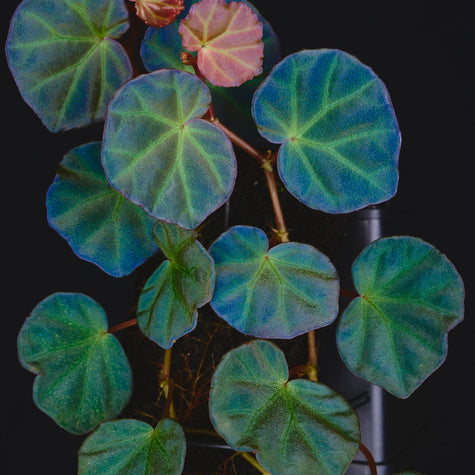
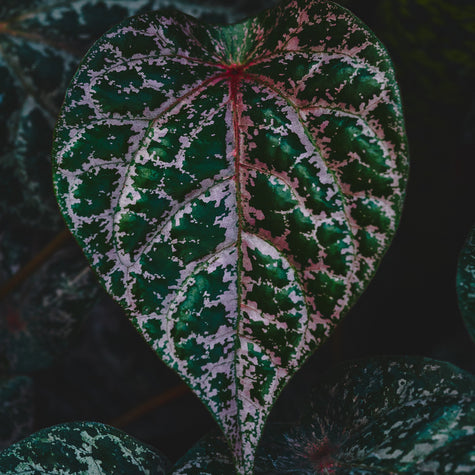
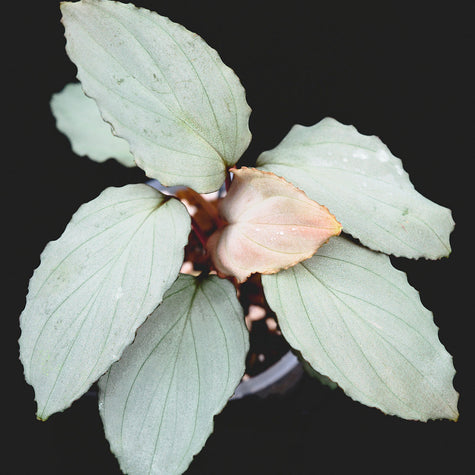
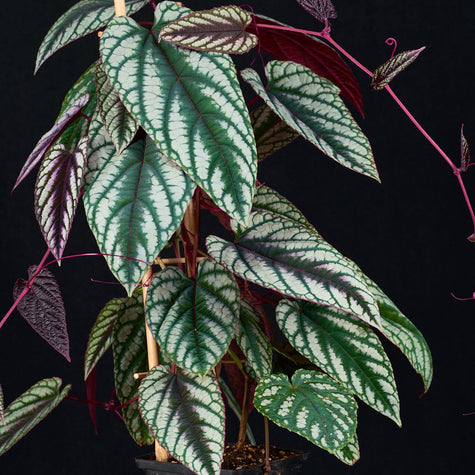
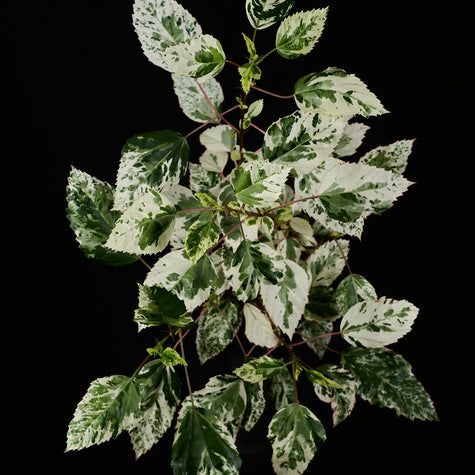
The leaf pattern of this species is quite variable, and in nature, very differently looking individuals grow right next to each other in the same population. The "Silver Edge" form is a single clone with a fixed pattern. One half of the leaf is always darkly patterned (and exhibits strong iridescence in low light), while the other half is mint green. But it's not just the leaves that are beautiful in this form; the petioles also display a contrasting striped pattern. The flowers are also lovely to look at; they are light pink and quite large for a begonia.
Since "Silver Edge" is a clone, meaning all specimens come from the same plant, they are all the same sex, namely female .
If you wish to propagate them via seed or crossbreeding, you will need to find a suitable male plant. Plants of the " Dark Form " clone are male and available in our shop.
[/expand]
[/porto_content_box]
Care tips
Light & Location
Substrate & Repotting
Watering & Fertilizing


Welcome
Bring the Tropic to Your Home
Jungle Leaves is a team of 3 biologists who breed, propagate and sell extraordinary and unique plants from all over the world, also in cooperation with botanical gardens.