



Burttianthus veluntandrus (Aridarum sp. 'Long Leaf' / 'Narrow')
19,99€ EUR
/
Sold out
Tax included.
Shipping calculated at checkout.
 Burttianthus veluntandrus (Aridarum sp. 'Long Leaf' / 'Narrow')
19,99€ EUR
/
Burttianthus veluntandrus (Aridarum sp. 'Long Leaf' / 'Narrow')
19,99€ EUR
/

Burttianthus veluntandrus (Aridarum sp. 'Long Leaf' / 'Narrow')
19,99€ EUR
/
products.product.pickup_availability.unavailable
Description
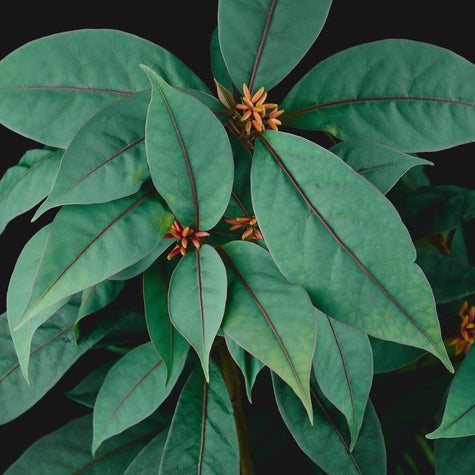
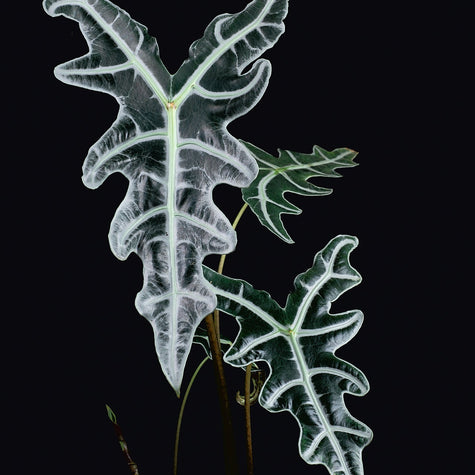
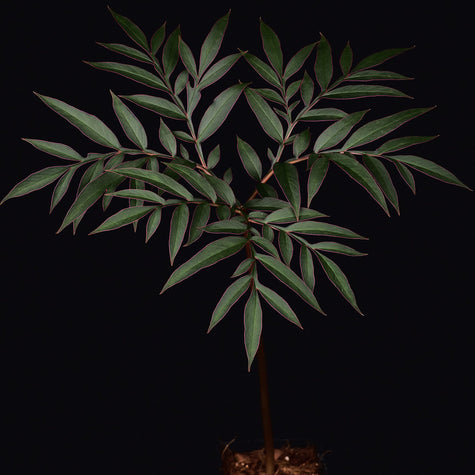
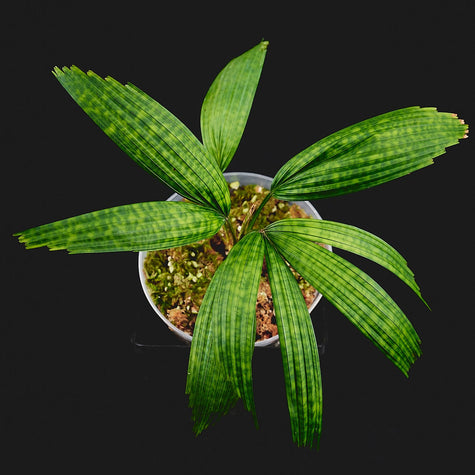
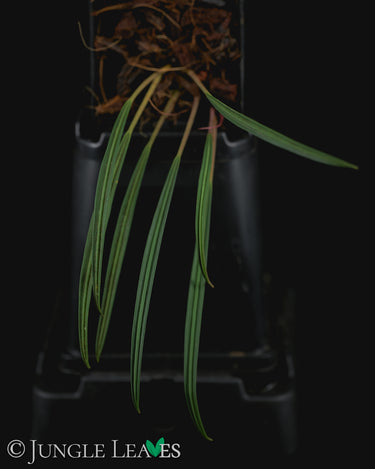
This exceptionally pretty little plant is an Araceae (Aroid) native to the area near the town of Bintulu in Sarawak, Borneo. It has a creeping rhizome with linear leaves up to 15 cm long but only 5 to 8 mm wide. The leaves have a very prominent midrib and thick, raised veins along the margins. The leaf color varies considerably depending on the amount of light the plant receives. In bright light, they are a rich, light green, while in low light they become dark green to almost black. The petioles are yellow to orange. The flowers are upright, about 5 cm long, and white with a yellow spadix.
Its unwieldy name, " Burttianthus veluntandrus, " stems from a comprehensive 2018 revision that genetically and morphologically classified a whole host of similar small aroids originating from Borneo. Previously, these had been so confusing that even the authors described the whole situation as "chaos."
It is primarily known in the aquarium hobby, usually under the names Aridarum 'Narrow' or Aridarum 'Long Leaf', although "known" might be the wrong word here. Aridarum are (still) absolute rarities and are very rarely offered for sale, mostly as aquatic plants for aquariums. They do not tolerate submerged cultivation (i.e., permanently underwater) for long, even with additional CO₂ dosing. Although they grow directly on the banks of streams and rivers, they are above water for almost the entire year. They occur on bare rock, often in locations exposed to full sun for all or part of the day, and can survive extended periods without water. Only during the rainy season are they submerged for a few weeks. The thickened, leathery, or succulent, stiff leaves are adaptations to this lifestyle.
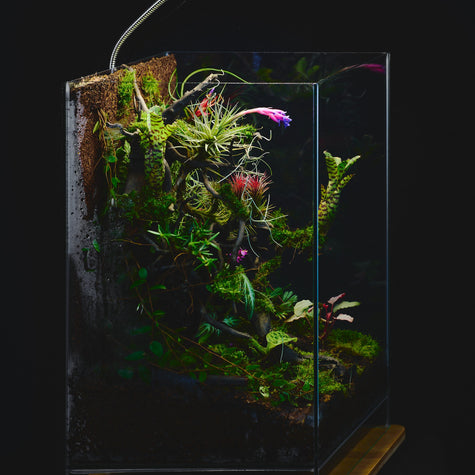
We therefore explicitly recommend NOT placing these plants in an aquarium. They do not thrive there long-term. This misconception is probably the reason they have the reputation of being difficult to care for. In our experience, they are much better suited as plants for paludariums, drip walls, and humid terrariums, and grow very easily when completely emersed (i.e., above water). They look their best when they can grow as they would in nature, for example, attached to a rock or mounted on the back wall of a terrarium. Here is a short video from the natural habitat of a close relative , Aridarum . Anyone interested in learning more about the lifestyle of these quirky little plants can find further information in this excellent overview (in English).
You will receive a flowering plant in a 7cm pot. These plants are grown by us entirely emersed, but in very high humidity, and have strong root systems. Please do not use them as aquarium plants.
Its unwieldy name, " Burttianthus veluntandrus, " stems from a comprehensive 2018 revision that genetically and morphologically classified a whole host of similar small aroids originating from Borneo. Previously, these had been so confusing that even the authors described the whole situation as "chaos."
It is primarily known in the aquarium hobby, usually under the names Aridarum 'Narrow' or Aridarum 'Long Leaf', although "known" might be the wrong word here. Aridarum are (still) absolute rarities and are very rarely offered for sale, mostly as aquatic plants for aquariums. They do not tolerate submerged cultivation (i.e., permanently underwater) for long, even with additional CO₂ dosing. Although they grow directly on the banks of streams and rivers, they are above water for almost the entire year. They occur on bare rock, often in locations exposed to full sun for all or part of the day, and can survive extended periods without water. Only during the rainy season are they submerged for a few weeks. The thickened, leathery, or succulent, stiff leaves are adaptations to this lifestyle.
We therefore explicitly recommend NOT placing these plants in an aquarium. They do not thrive there long-term. This misconception is probably the reason they have the reputation of being difficult to care for. In our experience, they are much better suited as plants for paludariums, drip walls, and humid terrariums, and grow very easily when completely emersed (i.e., above water). They look their best when they can grow as they would in nature, for example, attached to a rock or mounted on the back wall of a terrarium. Here is a short video from the natural habitat of a close relative , Aridarum . Anyone interested in learning more about the lifestyle of these quirky little plants can find further information in this excellent overview (in English).
You will receive a flowering plant in a 7cm pot. These plants are grown by us entirely emersed, but in very high humidity, and have strong root systems. Please do not use them as aquarium plants.
Care tips
Light & Location
Substrate & Repotting
Watering & Fertilizing
What makes us at Jungle Leaves special!


Welcome
Bring the Tropic to Your Home
Jungle Leaves is a team of 3 biologists who breed, propagate and sell extraordinary and unique plants from all over the world, also in cooperation with botanical gardens.