

Cryptanthus zonatus 'Elaine'
7,99€ EUR
/
Sold out
Tax included.
Shipping calculated at checkout.
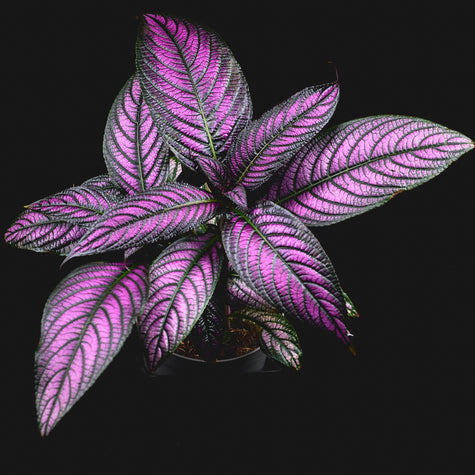
Small and very drought-resistant bromeliad from Brazil with a chic zebra pattern and pink variegation.
 Cryptanthus zonatus 'Elaine'
7,99€ EUR
/
Cryptanthus zonatus 'Elaine'
7,99€ EUR
/

Cryptanthus zonatus 'Elaine'
7,99€ EUR
/
products.product.pickup_availability.unavailable
Description
Cryptanthus zonatus, with a diameter of approximately 20 to a maximum of 30 cm, is a relatively small bromeliad (Bromeliaceae) native to the east coast of Brazil. There, it grows terrestrially (in the ground) in relatively dry savanna regions, not as an epiphyte in the rainforest like many other bromeliads. For this reason, Cryptanthus are often also called "earth stars." The tough, thick leaves serve as water storage.
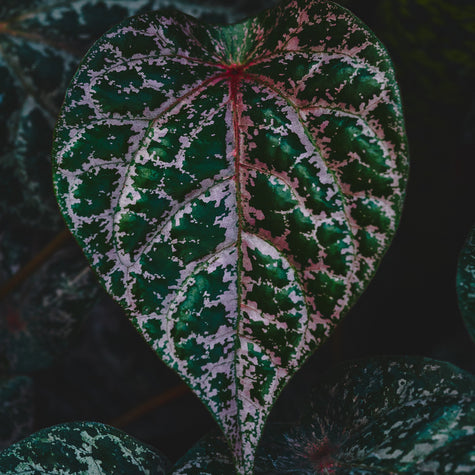
Cobia zonatus has a dark brown to black base color with very striking white banding. It is therefore also called the zebra plant or zebra earthstar. The cultivar 'Elaine' has pink variegation running lengthwise along the leaf margin. It was selected over a period of nine years by the Cobia Nursery in Winter Garden, Florida, and patented in 1980.
It is often still sold under the old synonym Cryptanthus fosterianus . However, this name is no longer accepted. The correct botanical name, also for the cultivar 'Elaine', is Cryptanthus zonatus .
Sometimes 'Elaine' is also sold as 'Eileen'. This is a spelling mistake.
After an inflorescence has formed, the mother plant slowly dies and produces many small offshoots that emerge on the sides.
Cobia zonatus has a dark brown to black base color with very striking white banding. It is therefore also called the zebra plant or zebra earthstar. The cultivar 'Elaine' has pink variegation running lengthwise along the leaf margin. It was selected over a period of nine years by the Cobia Nursery in Winter Garden, Florida, and patented in 1980.
It is often still sold under the old synonym Cryptanthus fosterianus . However, this name is no longer accepted. The correct botanical name, also for the cultivar 'Elaine', is Cryptanthus zonatus .
Sometimes 'Elaine' is also sold as 'Eileen'. This is a spelling mistake.
After an inflorescence has formed, the mother plant slowly dies and produces many small offshoots that emerge on the sides.
Care tips
Light & Location
Substrate & Repotting
Watering & Fertilizing
What makes us at Jungle Leaves special!


Welcome
Bring the Tropic to Your Home
Jungle Leaves is a team of 3 biologists who breed, propagate and sell extraordinary and unique plants from all over the world, also in cooperation with botanical gardens.