




Drosera paradoxa
9,99€ EUR
/
Sold out
Tax included.
Shipping calculated at checkout.
 Drosera paradoxa
9,99€ EUR
/
Drosera paradoxa
9,99€ EUR
/

Drosera paradoxa
9,99€ EUR
/
products.product.pickup_availability.unavailable
Description
This small sundew originates from northern Australia and belongs to the subgenus Lasiocephala . This subgenus is also known as the "Petiolaris Complex." Sundews from this subgenus all come from the tropical regions of northern Australia and are characterized by their peltate leaves and often very compact growth as small, pincushion-shaped clumps. The approximately 14 closely related species are among the most beautiful Drosera , but are generally considered difficult to cultivate.
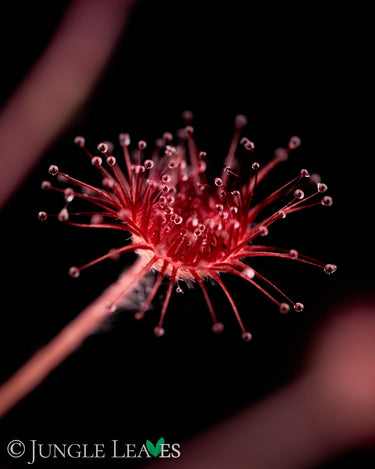
Drosera paradoxa is considered the easiest species to cultivate of all Petiolaris complex sundews and is therefore a good entry point into this beautiful group. Drosera paradoxa reaches a diameter of about 10 cm, but usually remains somewhat smaller. The long, hairy leaf stalks bear approximately 0.5 to 1 cm in diameter, circular leaves with red trapping tentacles. In bright light, Drosera paradoxa turns a deep red throughout and remains more compact. Mature plants can develop a trunk up to 30 cm tall.
Drosera paradoxa occurs on nutrient-poor sandy soils over sandstone in or along the banks of creeks (watercourses that only carry water during the rainy season) or in sandstone crevices. During the rainy season from March to April, its habitat is typically flooded.
You will receive a strong plant in a 9cm pot.
Drosera paradoxa is considered the easiest species to cultivate of all Petiolaris complex sundews and is therefore a good entry point into this beautiful group. Drosera paradoxa reaches a diameter of about 10 cm, but usually remains somewhat smaller. The long, hairy leaf stalks bear approximately 0.5 to 1 cm in diameter, circular leaves with red trapping tentacles. In bright light, Drosera paradoxa turns a deep red throughout and remains more compact. Mature plants can develop a trunk up to 30 cm tall.
Drosera paradoxa occurs on nutrient-poor sandy soils over sandstone in or along the banks of creeks (watercourses that only carry water during the rainy season) or in sandstone crevices. During the rainy season from March to April, its habitat is typically flooded.
You will receive a strong plant in a 9cm pot.
Care tips
Light & Location
Substrate & Repotting
Watering & Fertilizing
What makes us at Jungle Leaves special!


Welcome
Bring the Tropic to Your Home
Jungle Leaves is a team of 3 biologists who breed, propagate and sell extraordinary and unique plants from all over the world, also in cooperation with botanical gardens.