




Remusatia vivipara
14,99€ EUR
/
Sold out
Tax included.
Shipping calculated at checkout.
Exceptional relative of the elephant ear with giant leaves and a crazy propagation strategy.
 Remusatia vivipara
14,99€ EUR
/
Remusatia vivipara
14,99€ EUR
/

Remusatia vivipara
14,99€ EUR
/
products.product.pickup_availability.unavailable
Description
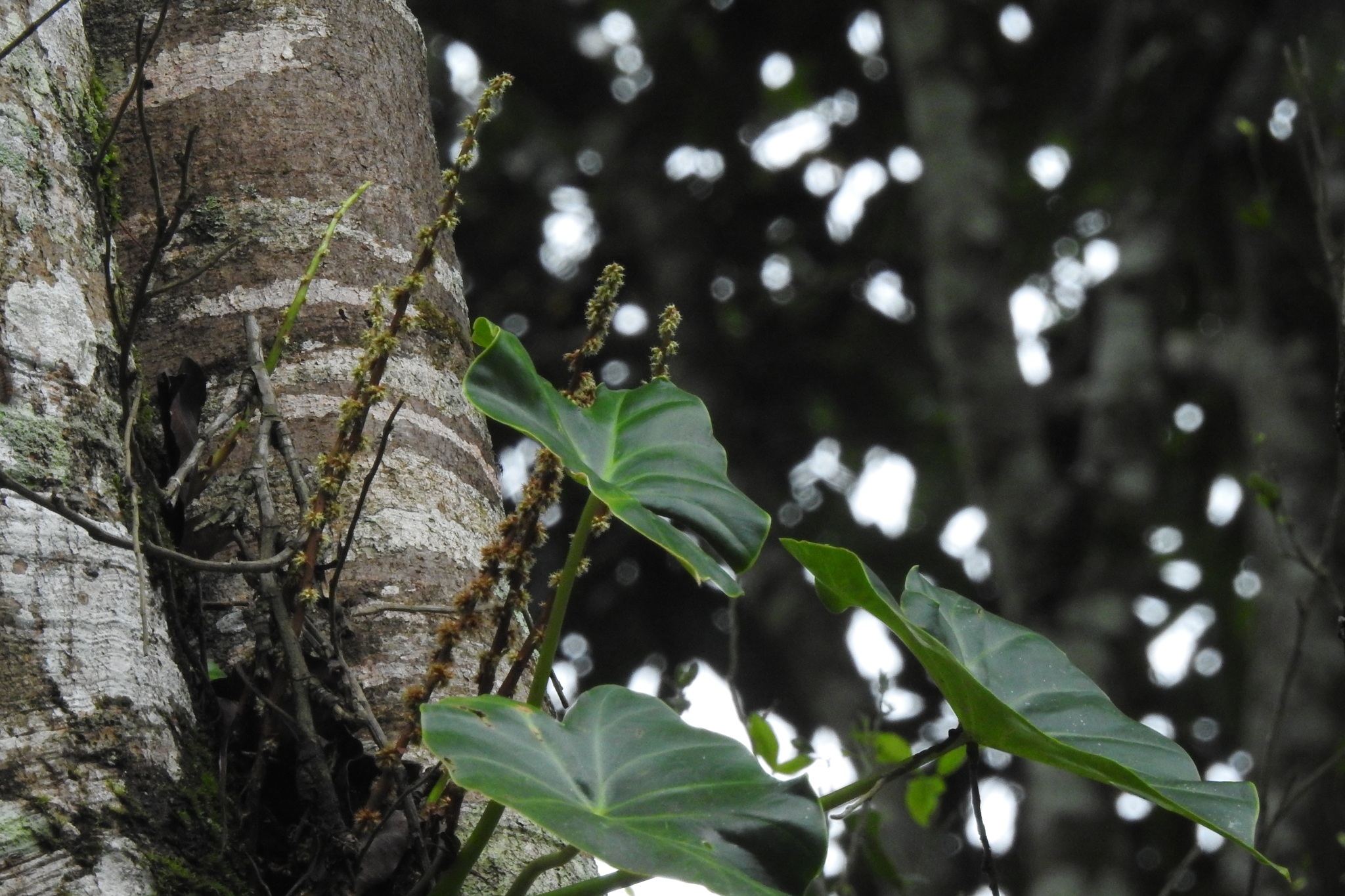
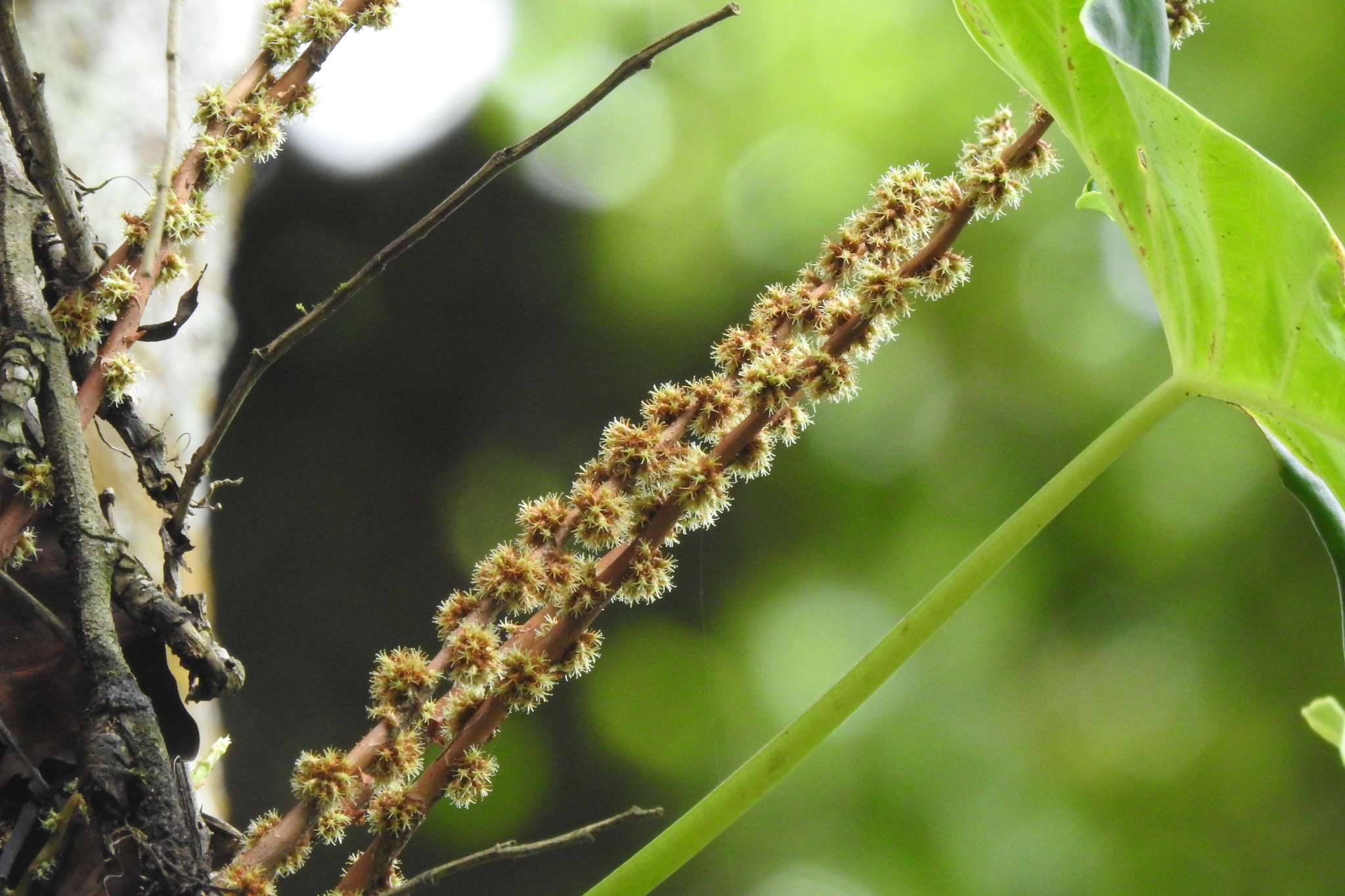
Remusatia vivipara , also known as "hitchhiker's ear," is one of the Araceae with the widest distribution. It occurs throughout Southeast Asia, northern Australia, Madagascar, and tropical Africa. This extremely wide distribution, as well as its unusual name, is due to its extraordinary dispersal strategy. It produces stolons that curl upwards from the ground, bearing numerous tiny tubers . These tubers are equipped with barbs and detach at the slightest touch. Animals passing by these stolons carry the tubers in their fur or feathers for hundreds of kilometers. It thus spreads in a manner similar to burrs.
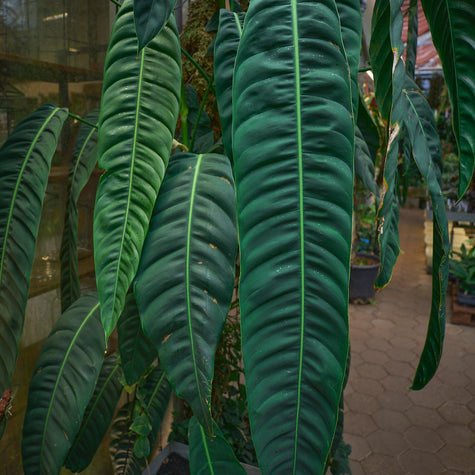
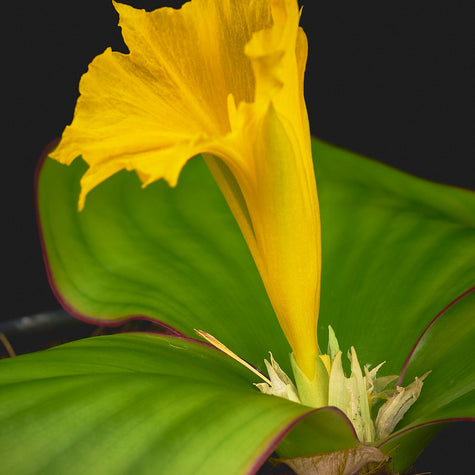
The plant itself resembles a common elephant's ear ( Colocasia esculenta ). It doesn't grow quite as large, with leaves reaching "only" about 1 meter in length and a height of 80 to 150 cm. Unlike the common elephant's ear, it doesn't grow exclusively in particularly damp areas or even in water. In nature, it is most often found as an epiphyte, but sometimes also terrestrially. Similar to the elephant's ear, Remusatia also undergoes a period of winter dormancy, during which it retreats into its underground tuber. Its flowers are yellow and appear in spring before the leaves.
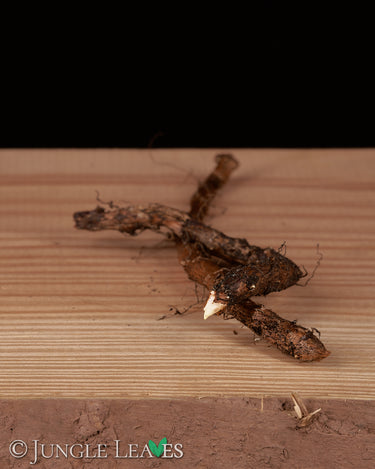
These are the overwintering tubers for sale here, not the tiny propagating tubers!
The plant itself resembles a common elephant's ear ( Colocasia esculenta ). It doesn't grow quite as large, with leaves reaching "only" about 1 meter in length and a height of 80 to 150 cm. Unlike the common elephant's ear, it doesn't grow exclusively in particularly damp areas or even in water. In nature, it is most often found as an epiphyte, but sometimes also terrestrially. Similar to the elephant's ear, Remusatia also undergoes a period of winter dormancy, during which it retreats into its underground tuber. Its flowers are yellow and appear in spring before the leaves.
These are the overwintering tubers for sale here, not the tiny propagating tubers!
Care tips
Light & Location
Substrate & Repotting
Watering & Fertilizing
What makes us at Jungle Leaves special!


Welcome
Bring the Tropic to Your Home
Jungle Leaves is a team of 3 biologists who breed, propagate and sell extraordinary and unique plants from all over the world, also in cooperation with botanical gardens.