



Anthorrhiza chrysacantha
 Anthorrhiza chrysacantha
49,99€ EUR
/
Anthorrhiza chrysacantha
49,99€ EUR
/

products.product.pickup_availability.unavailable
Description
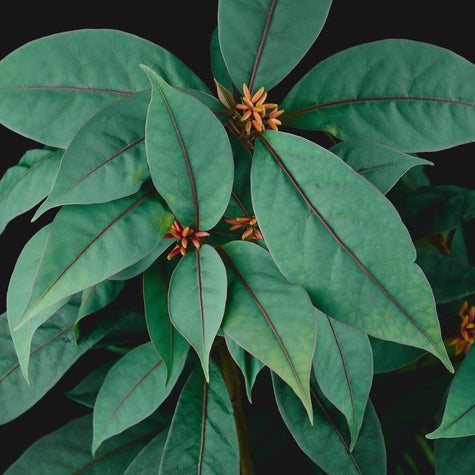
This ant plant belongs to the little-known genus Anthorrhiza. It differs from the better-known Hydnophytum and Myrmecodia in the arrangement and structure of its flowers and inflorescences, combining characteristics of both genera.
Anthorrhiza chrysacantha is native to eastern Papua New Guinea.
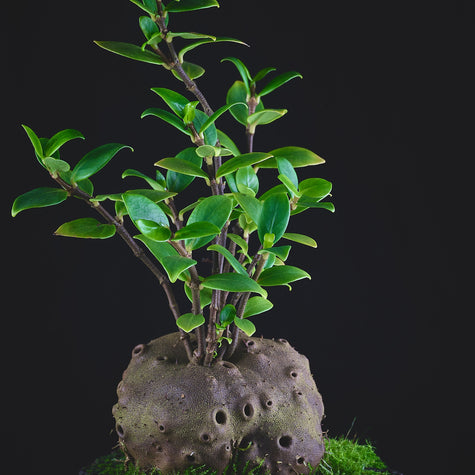
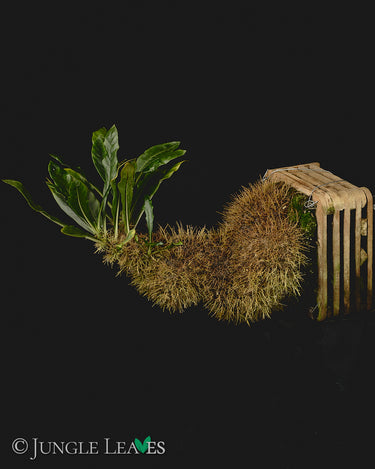
The caudex of A. chrysacantha is roundish to oval, rather irregularly shaped, and in the wild the plant usually hangs “upside down” from the dwarved trees in the highland cloud forest. The surface is covered with countless, branched root spines. The specific epithet “chrysacantha,” which translates to “golden spines,” refers to this feature. In older plants, the caudex turns black, making the golden thorns particularly striking.
The sparsely branched stems are sturdy, up to about 50 cm long, and bear thick, leathery leaves. In the wild, the caudex can grow enormous, reaching over 80 cm in diameter! Plants in cultivation tend to remain smaller.
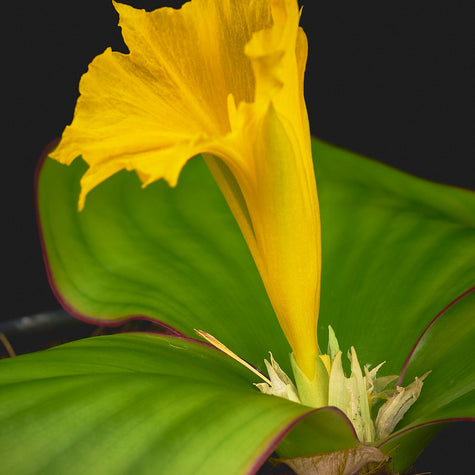
In contrast to the similar species Anthorrhiza caerulea, A. chrysacantha forms multiple stems and has smaller, less wavy leaves and white rather than bluish flowers. Overall, A. chrysacantha is significantly larger, and the caudex of older, multi-stemmed plants can reach gigantic proportions.
Anthorrhiza grow surprisingly quickly with good fertilization, often faster than many other ant plants. This bizarre, large species is a highlight in any larger terrarium or grow tent. It requires highland conditions.
About Ant Plants
Anthorrhiza are so-called “ant plants” from the madder family (Rubiaceae). They are widely distributed from Southeast Asia to Australia and from Papua to the Solomon Islands, and usually grow epiphytically on trees. They belong to the myrmecodomic ant plants, meaning they provide a nest for ants. Their thickened stem, also known as a “caudex,” is crisscrossed by numerous tunnels and chambers inhabited by specialized ants, mostly of the genus Philidris. The ants do not construct the chambers or the entrances themselves. These are formed solely by the plant, regardless of whether ants are present or not.
The plant has a mutualistic relationship (beneficial to both parties) with the ants living inside it. The ants protect the plant and their nest, and fertilize it with food scraps, feces, and other “waste.” There are several different types of chambers within the plant: some with smooth walls and others with warty walls. The warty chambers, in particular, are specially adapted to absorb nutrients. The ants use the smooth chambers as living quarters and the warty chambers as a “dump,” thereby supplying the plant with nutrients. In some highly specialized ant plants, the ants even pollinate the flowers and plant the seedlings!
Over many years, colonies of ants and ant plants spread across a tree, and other ant-associated epiphytes—such as Hoya, Dischidia, Lecanopteris, and orchids—join them. A so-called “ant garden” emerges.
Not every ant plant is inhabited by ants in nature. There are even numerous species in which ants have never been found! This also means that no ant plant necessarily needs a colony of ants to survive or grow well. All of our cultivated ant plants are, of course, ant-free! The caudex forms exactly as it does in nature, even without ants.
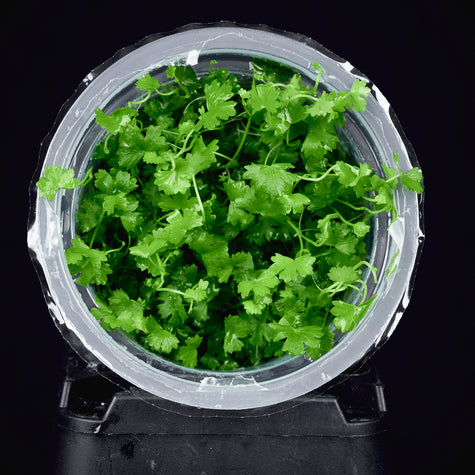
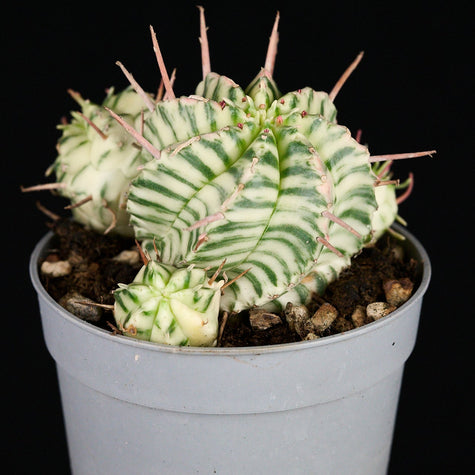
You’ll receive a young plant in a 5.5 cm pot (see image 3 in the gallery).
Care tips
Light & Location
Substrate & Repotting
Watering & Fertilizing


Welcome
Bring the Tropic to Your Home
Jungle Leaves is a team of 3 biologists who breed, propagate and sell extraordinary and unique plants from all over the world, also in cooperation with botanical gardens.