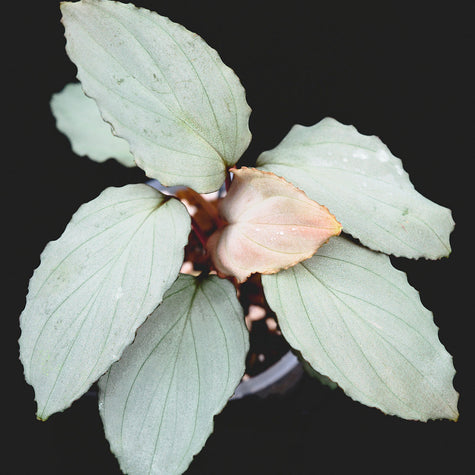
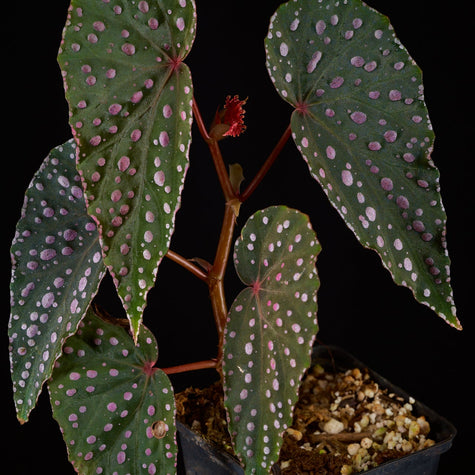
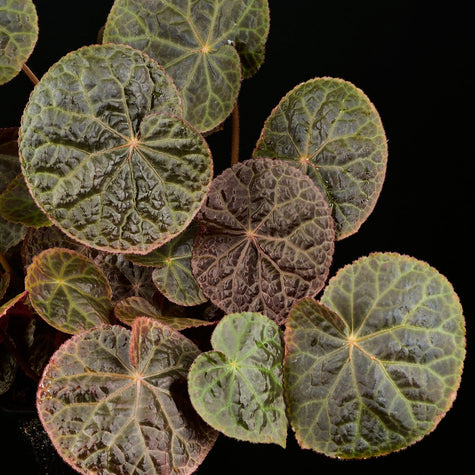
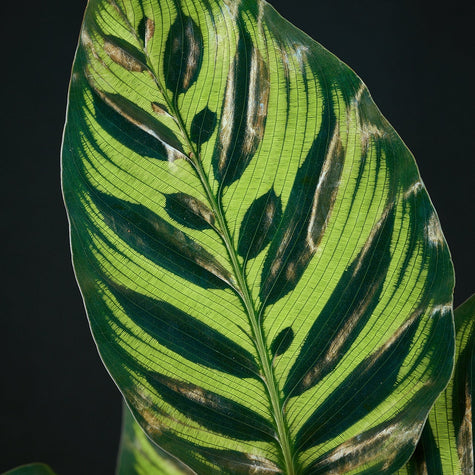
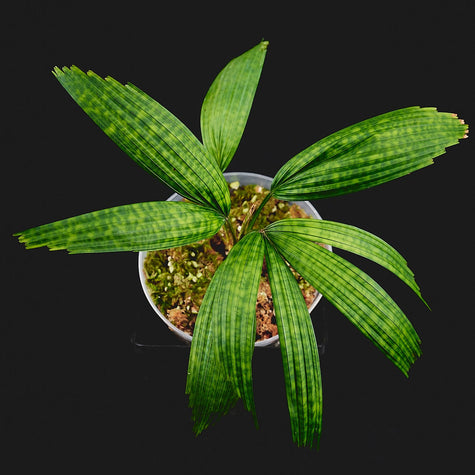
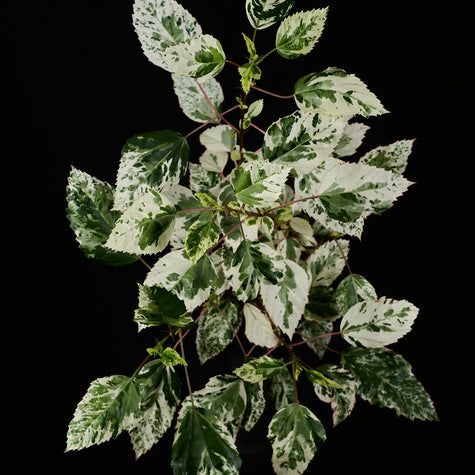
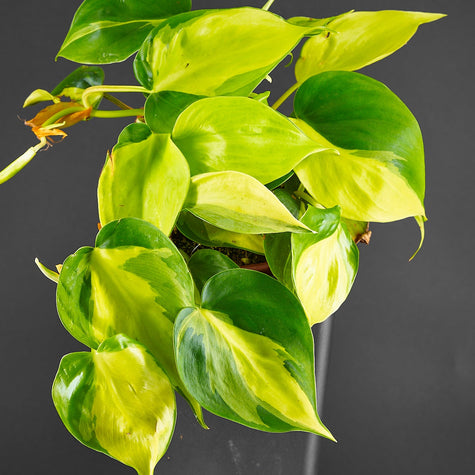
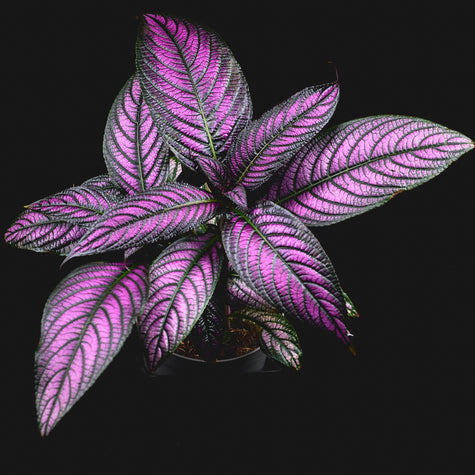


Begonia blancii (spotted form)
24,99€ EUR
/
Sold out
Tax included.
Shipping calculated at checkout.
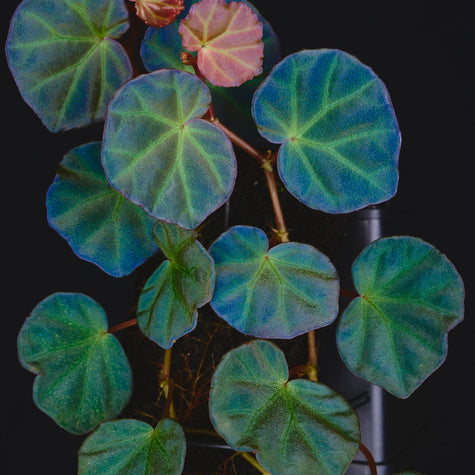
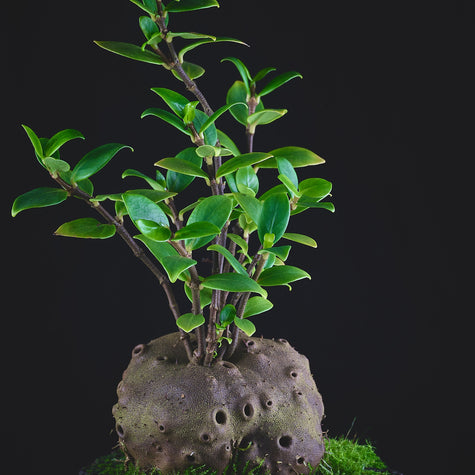
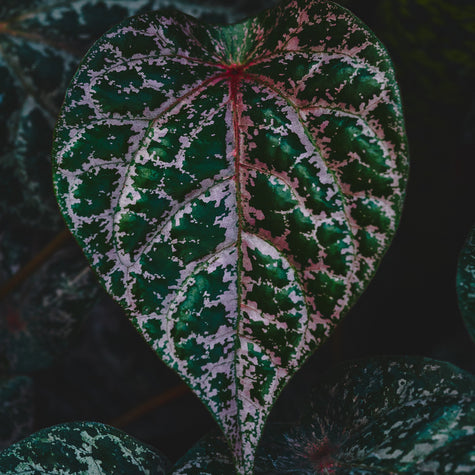
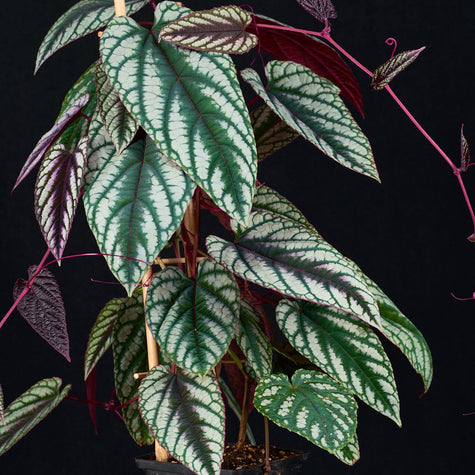
Begonia from Palawan with a very unusual leaf shape and beautiful, mottled pattern. It has fleshy, thick leaves.
 Begonia blancii (spotted form)
24,99€ EUR
/
Begonia blancii (spotted form)
24,99€ EUR
/

Begonia blancii (spotted form)
24,99€ EUR
/
products.product.pickup_availability.unavailable
Description
- Origin: Palawan (Philippines)
- Care: Easy / Medium / Advanced
- Suitable as a houseplant?: Yes / Limited / No
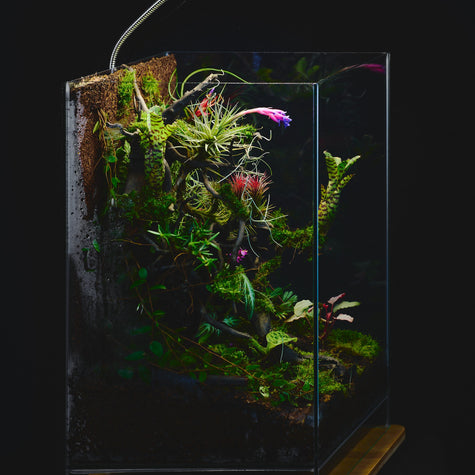
- Suitable locations: Terrarium, plant display case, west-facing window, east-facing window
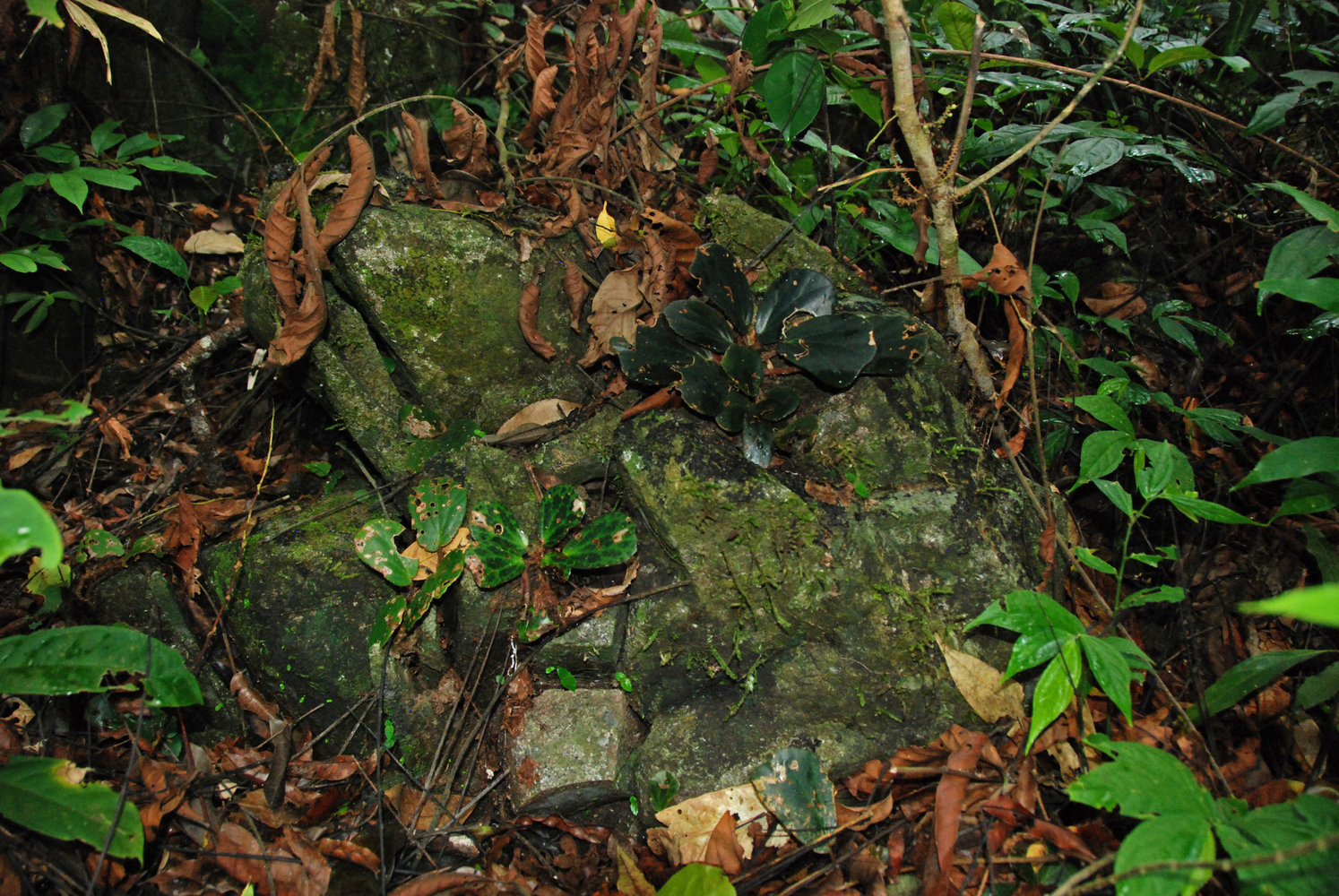
- Special features: This species is lithophytic (grows on rocks) and resistant to drought.
[porto_content_box border_top_color="#1e764d" border_radius="2" border_top_width="2" align="left"]
[expand Title=" Details about the plant "]
Begonia blancii was described as a new species in 2011 and named in honor of the botanist and photographer Patrick Blanc . It has so far only been found at its type locality, the Bulalakaw (or Bulalacao) Falls on Palawan Island at elevations of 300–400 meters. The falls are located within the El Nido-Taytay Wildlife Sanctuary. Although it is currently only known from the type locality, there are likely other populations in the unexplored neighboring forests. The species is quite common at the site and is therefore not currently classified as threatened in recognition of the successful management of the El Nido-Taytay Wildlife Sanctuary.
Begonia blancii is a lithophyte. In nature, it grows on and around small (up to about 1 m high) boulders in the shade of primary forest. The rocks are almost free of soil and moss, and the plant's roots grow directly on the surface.
Their almost triangular, stump-shaped leaves are very striking. The pattern on the leaves can vary greatly, and in nature, plants with completely different-looking leaves grow right next to each other . There are specimens with completely green, completely dark, and spotted leaves. The form offered here has attractively light/dark marbled leaves, reminiscent of camouflage.
Begonia blancii has several adaptations to drought. Its leaves are thick and fleshy, almost succulent, and its stomata (pores) are clustered together rather than individually on the underside of the leaf. Exactly how this helps prevent desiccation is unknown, but this characteristic is also found in other drought-resistant begonias. Because of these adaptations, it also does not shed its leaves during the dry season, as many other begonias from the region do.
It blooms with small, whitish to light pink flowers. Within the begonias, it belongs to the section Diploclinium .
[/expand]
[/porto_content_box]
Care tips
Light & Location
Substrate & Repotting
Watering & Fertilizing
What makes us at Jungle Leaves special!


Welcome
Bring the Tropic to Your Home
Jungle Leaves is a team of 3 biologists who breed, propagate and sell extraordinary and unique plants from all over the world, also in cooperation with botanical gardens.