

Cyathea cooperi (Australian tree fern)
14,99€ EUR
/
Sold out
Tax included.
Shipping calculated at checkout.
 Cyathea cooperi (Australian tree fern)
14,99€ EUR
/
Cyathea cooperi (Australian tree fern)
14,99€ EUR
/

Cyathea cooperi (Australian tree fern)
14,99€ EUR
/
products.product.pickup_availability.unavailable
Description
The accepted name for this species is now Sphaeropteris cooperi , no longer Cyathea cooperi .
Until recently, we mistakenly had this species in our shop as Alsophila australis .
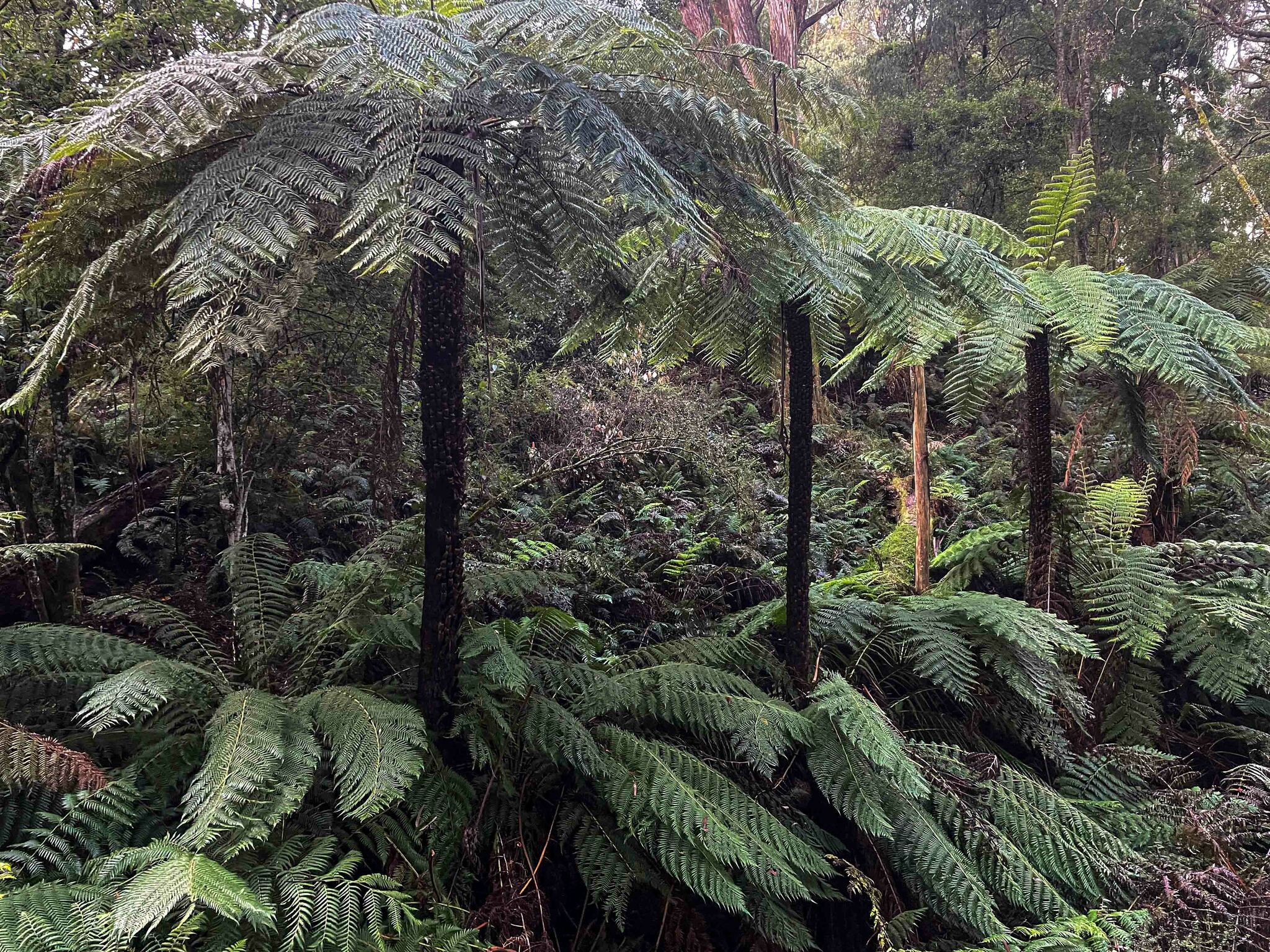
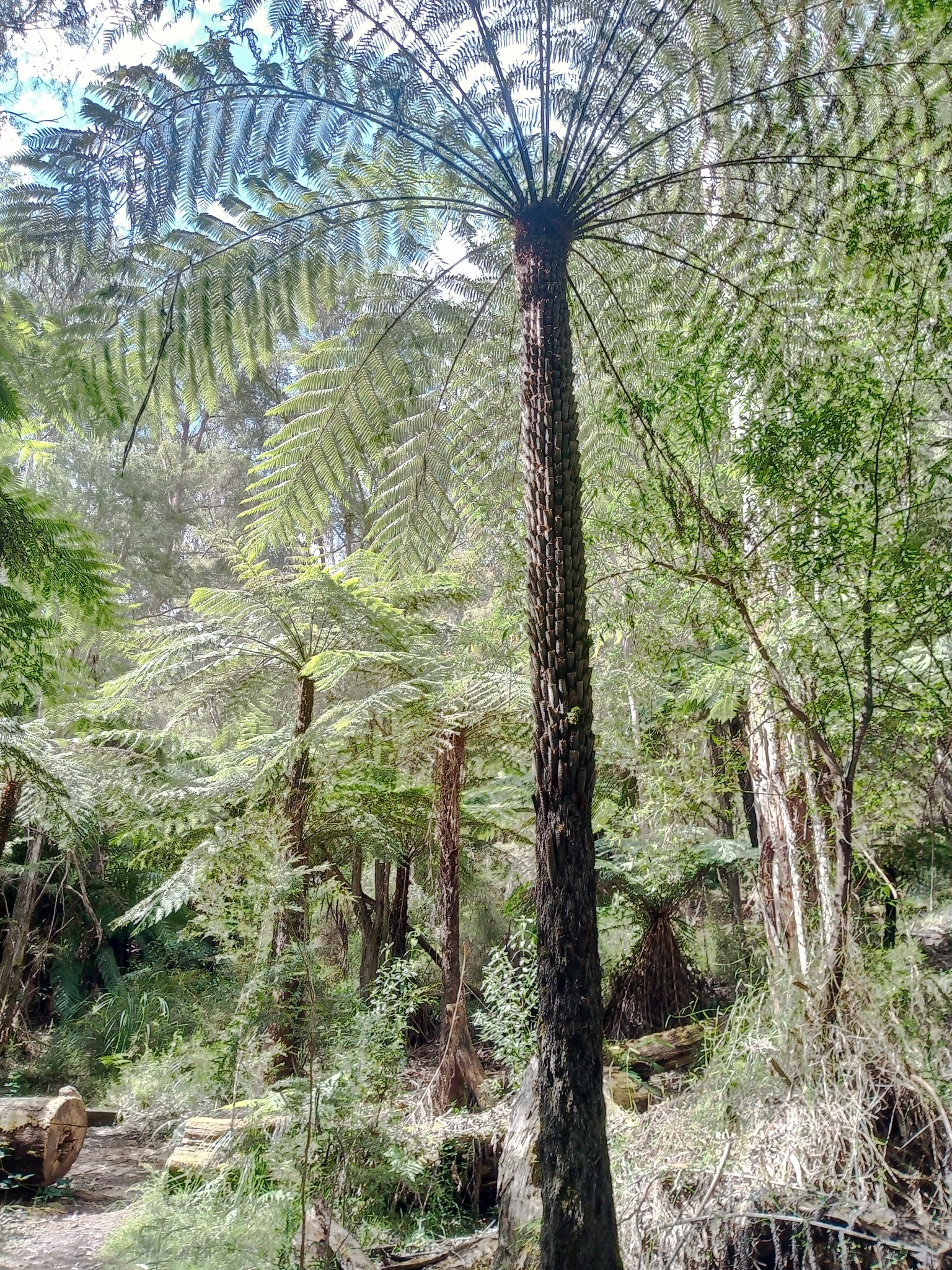
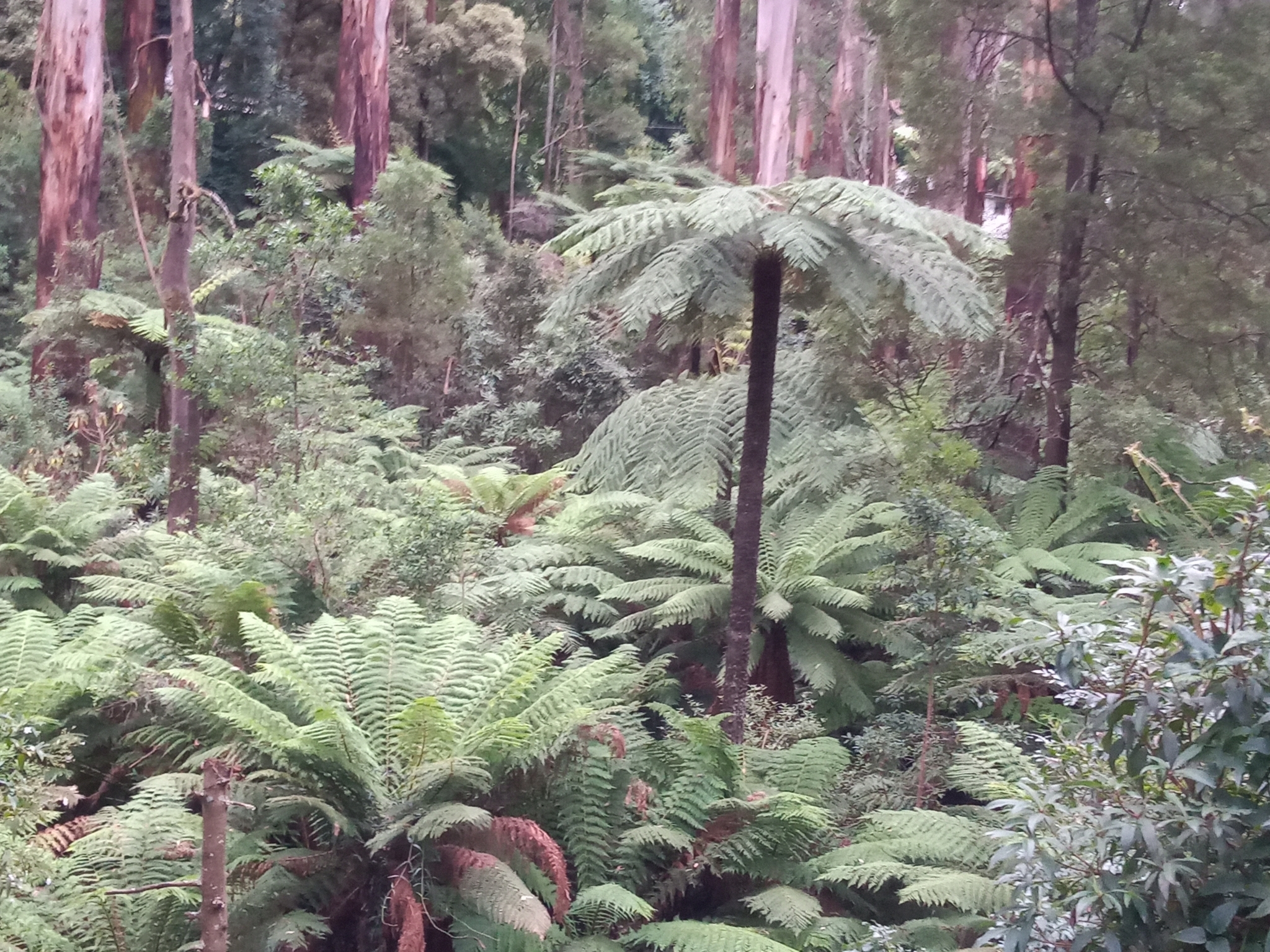
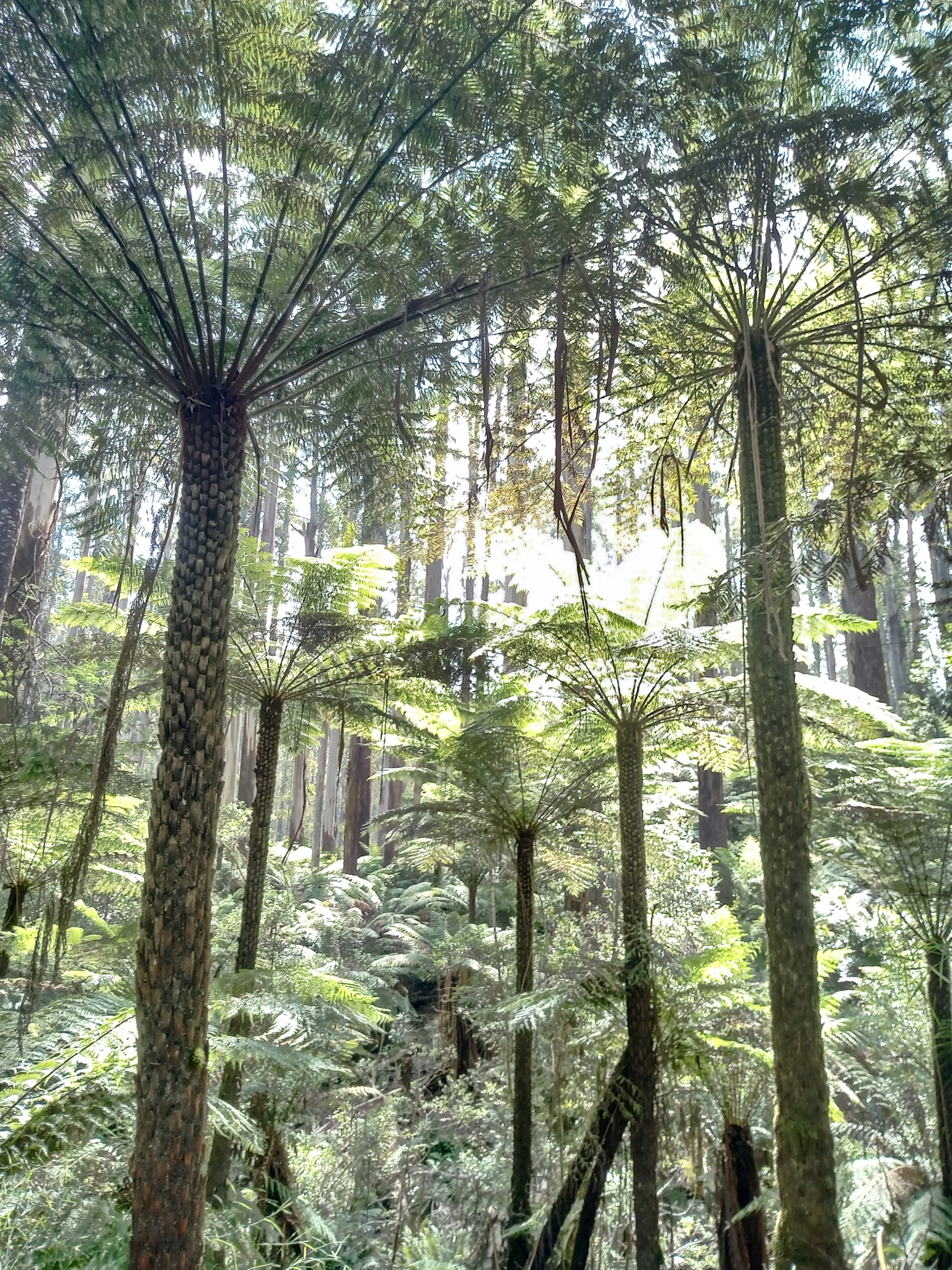
This tree fern originates from eastern and southeastern Australia, where it grows primarily in coastal rainforests as an understory plant beneath very large trees . Despite its considerable mature size of approximately 5 to 6 meters in height (and in exceptional cases even taller), it is still considered an understory plant!
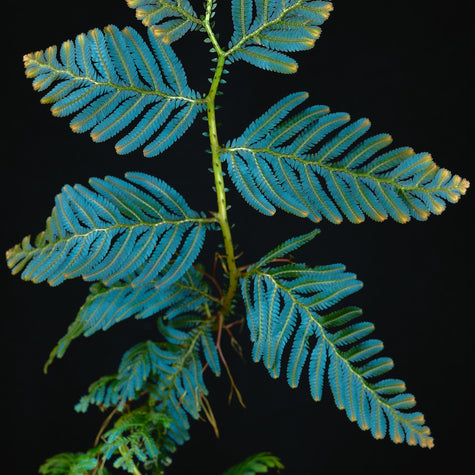
At the top of the trunk, the fern fronds, which can reach up to 3 meters in length, form a light crown. The stems and fronds themselves are densely covered in hairs. These hairs come loose even with the slightest touch.
The trunks of tree ferns actually consist of roots that become woody over time, thus supporting the plant. At the center of the trunk is the relatively thin rhizome, from which the new fronds develop. Therefore, they are not trees in the true sense (just like palms and bananas).
In its natural habitat , Alsophila australis is very successful and common. It often forms extensive stands and is the dominant plant of the undergrowth.
Cyathea (or now also Alsophila and Sphaeropteris ) grow much faster than the more well-known hardy tree fern, Dicksonia antarctica . A 2017 study measured the growth of both Cyathea and Dicksonia in their natural habitat. Dicksonia antarctica had an annual growth of approximately 33 (± 13) mm, while Alsophila australis grew a remarkable 73 (± 22) mm!
In cultivation (i.e., with regular watering and fertilization, and without pests and predators), plants usually grow faster than in the wild. In our experience, the annual growth of D. antarctica is about 5 to 8 cm per year, and that of S. cooperi is about 10 to 15 cm.
Interestingly, both species grow faster the taller they are. This means that over time, their growth doesn't slow down, but on the contrary, it gets faster and faster!
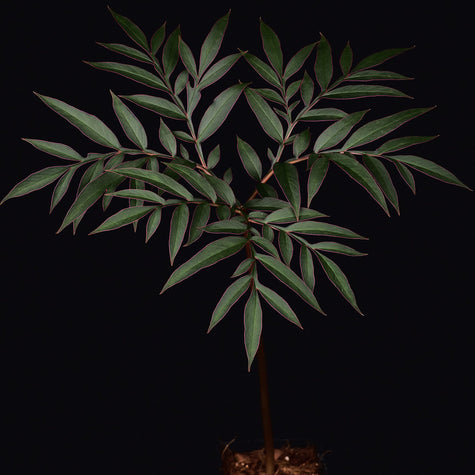
You will receive a young plant in a 12cm pot, approximately 20 to 30cm tall. These plants do not yet have a trunk.
The last plants of the season. A bit bigger than in the picture, but still not 100% perfect.
Until recently, we mistakenly had this species in our shop as Alsophila australis .
This tree fern originates from eastern and southeastern Australia, where it grows primarily in coastal rainforests as an understory plant beneath very large trees . Despite its considerable mature size of approximately 5 to 6 meters in height (and in exceptional cases even taller), it is still considered an understory plant!
At the top of the trunk, the fern fronds, which can reach up to 3 meters in length, form a light crown. The stems and fronds themselves are densely covered in hairs. These hairs come loose even with the slightest touch.
The trunks of tree ferns actually consist of roots that become woody over time, thus supporting the plant. At the center of the trunk is the relatively thin rhizome, from which the new fronds develop. Therefore, they are not trees in the true sense (just like palms and bananas).
In its natural habitat , Alsophila australis is very successful and common. It often forms extensive stands and is the dominant plant of the undergrowth.
Cyathea (or now also Alsophila and Sphaeropteris ) grow much faster than the more well-known hardy tree fern, Dicksonia antarctica . A 2017 study measured the growth of both Cyathea and Dicksonia in their natural habitat. Dicksonia antarctica had an annual growth of approximately 33 (± 13) mm, while Alsophila australis grew a remarkable 73 (± 22) mm!
In cultivation (i.e., with regular watering and fertilization, and without pests and predators), plants usually grow faster than in the wild. In our experience, the annual growth of D. antarctica is about 5 to 8 cm per year, and that of S. cooperi is about 10 to 15 cm.
Interestingly, both species grow faster the taller they are. This means that over time, their growth doesn't slow down, but on the contrary, it gets faster and faster!
You will receive a young plant in a 12cm pot, approximately 20 to 30cm tall. These plants do not yet have a trunk.
The last plants of the season. A bit bigger than in the picture, but still not 100% perfect.
Care tips
Light & Location
Substrate & Repotting
Watering & Fertilizing
What makes us at Jungle Leaves special!


Welcome
Bring the Tropic to Your Home
Jungle Leaves is a team of 3 biologists who breed, propagate and sell extraordinary and unique plants from all over the world, also in cooperation with botanical gardens.