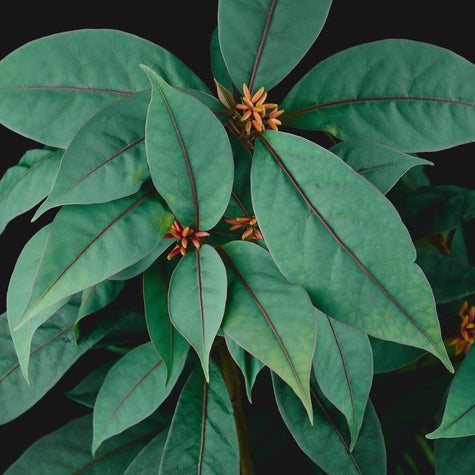
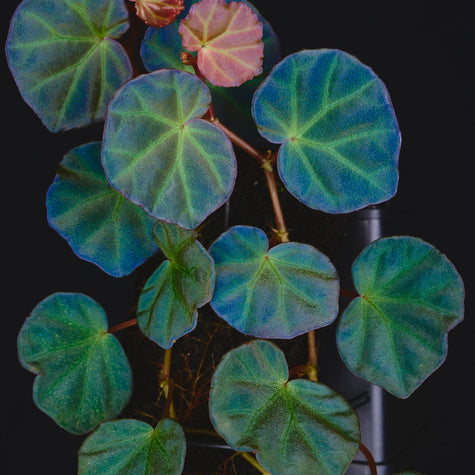
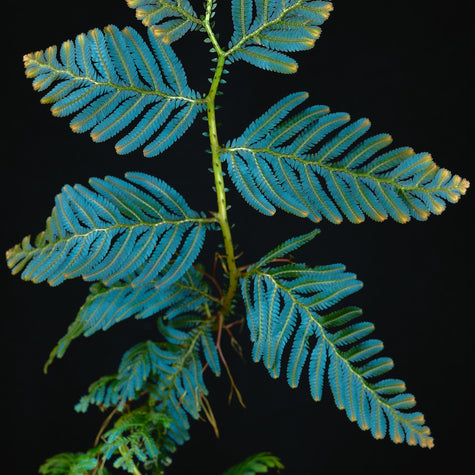
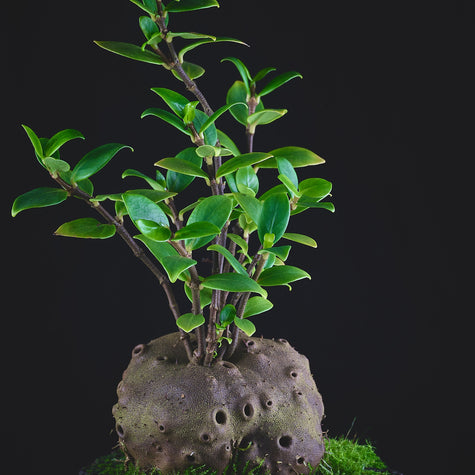
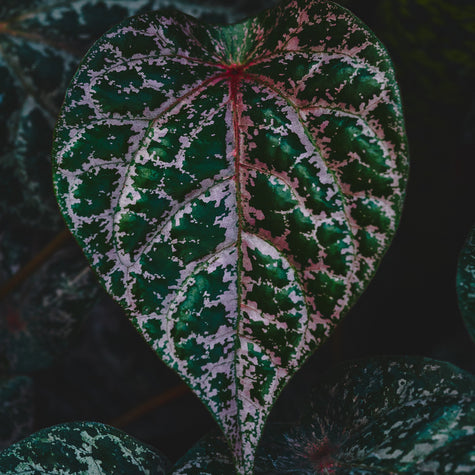
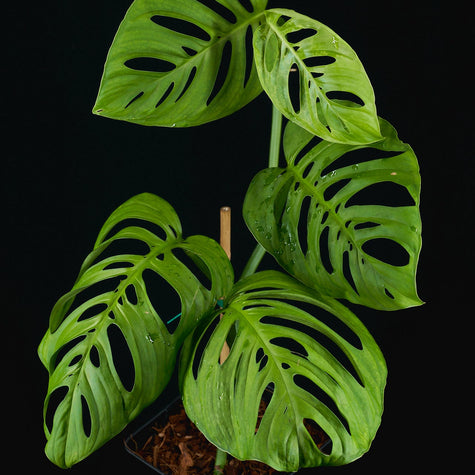
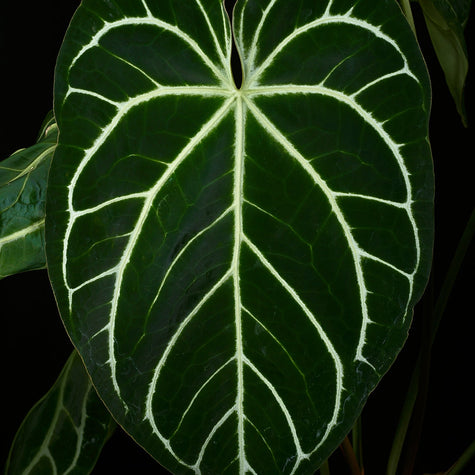
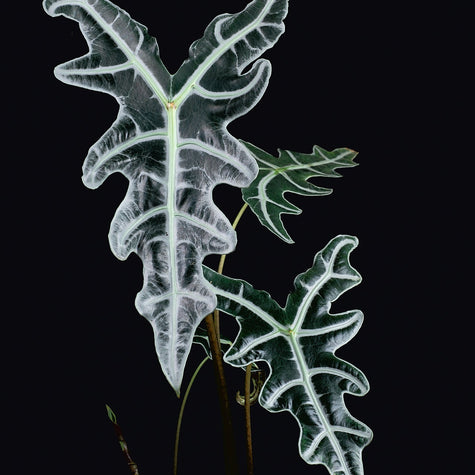
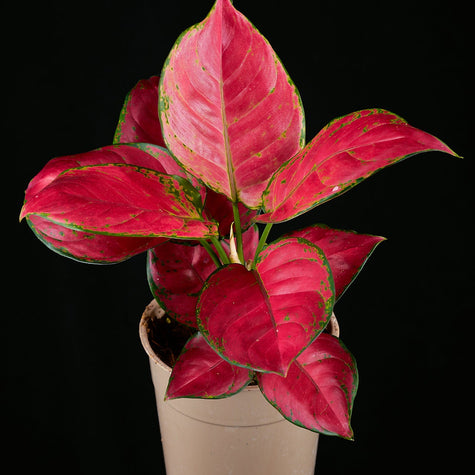
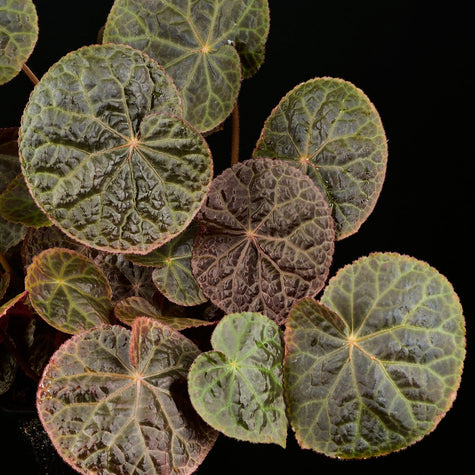
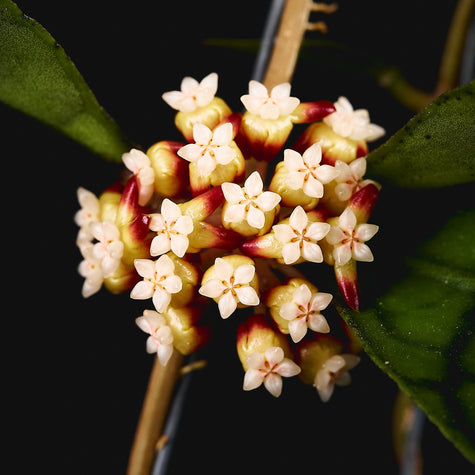
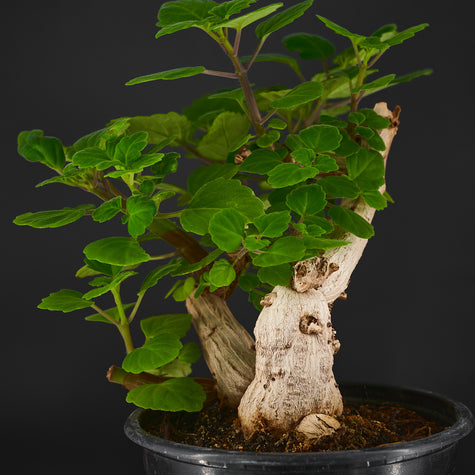
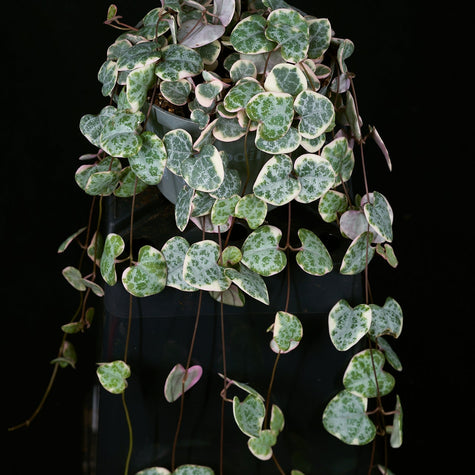
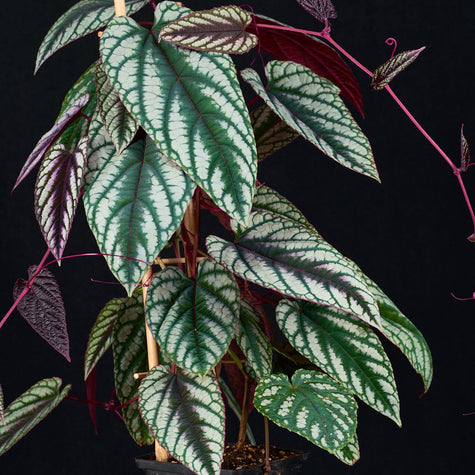
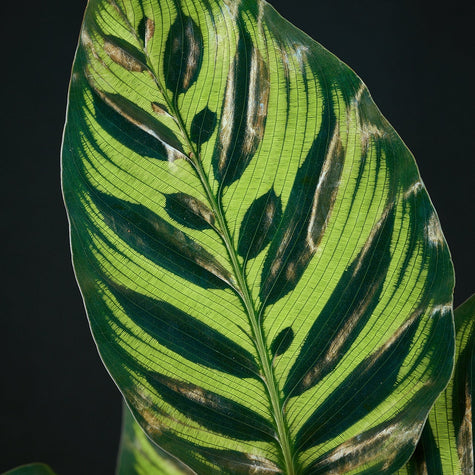
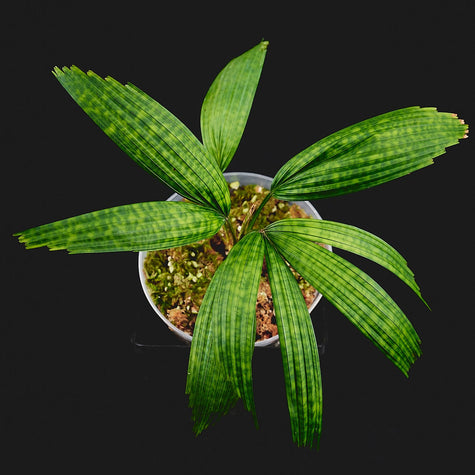


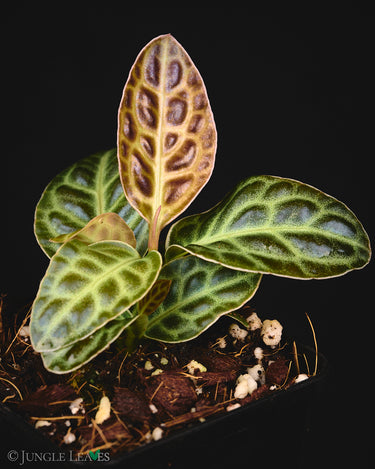


Labisia obtusifolia 'Turtleback'
19,99€ EUR
/
Sold out
Tax included.
Shipping calculated at checkout.
 Labisia obtusifolia 'Turtleback'
19,99€ EUR
/
Labisia obtusifolia 'Turtleback'
19,99€ EUR
/

Labisia obtusifolia 'Turtleback'
19,99€ EUR
/
products.product.pickup_availability.unavailable
Description
- Origin: Landak, Borneo, Indonesia
- Care: Easy / Medium / Advanced
- Suitable as a houseplant?: Yes / Limited / No
- Suitable locations: Plant display case, west-facing window, east-facing window
- Special features: Faster growth than other Labisia , comparatively robust and quite insensitive.
[porto_content_box border_top_color="#1e764d" border_radius="2" border_top_width="2" align="left"]
[expand Title=" Details about the plant "]
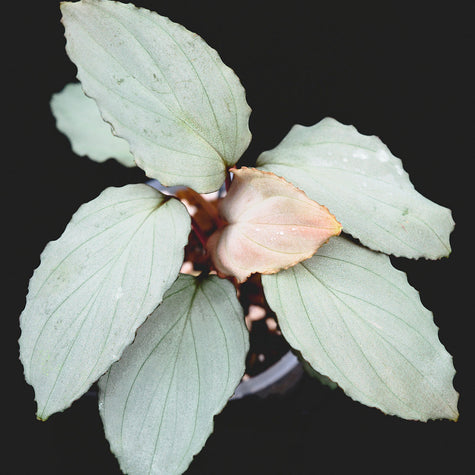
This tropical primrose (Primulaceae) has obovate, bullate leaves. The bullae are dark, and the veins are green. Leaf color varies from light green with red bullae (in fresh leaves) to dark green with metallic black bullae (in fully mature leaves and low light). The flowers are tiny and whitish to pink.
As with almost all tropical Primulaceae in cultivation, primarily Ardisia and Labisia , there is some confusion surrounding the name of this species. It was described and illustrated by Hans Hallier in 1910, based on a plant cultivated in the Bogor Botanical Garden (accession number Teijsmann 11067) . This plant was collected in 1893 by Jaheri during a large Dutch expedition to West Borneo, in what is now the Landak County of West Kalimantan Province. However, no herbarium specimen of this plant survives, and it is also considered lost in the wild. The description suggests, however, that it is actually an Ardisia , not a Labisia .
Like most Ardisia species , it grows slowly (though somewhat faster than many others!), but has surprisingly hard and robust leaves. Many Ardisia species popular as small terrarium plants in cultivation grow much larger than one might expect and are shrubs or even trees in their natural habitat, with mature leaves looking completely different from those of young plants. This species develops very large leaves, which, however, do not change in appearance but always retain their beautiful, bullate shape. It can reach a diameter of approximately 1 meter, yet remains flat. Under good conditions and with proper care, it is one of the few Ardisia / Labisia species suitable as a houseplant.
[/expand]
[/porto_content_box]
Care tips
Light & Location
Substrate & Repotting
Watering & Fertilizing
What makes us at Jungle Leaves special!


Welcome
Bring the Tropic to Your Home
Jungle Leaves is a team of 3 biologists who breed, propagate and sell extraordinary and unique plants from all over the world, also in cooperation with botanical gardens.